I was recently on my local TV station for an interview on my work on Henry Tufts! Thanks to host Robert Megerdichian for having me on and granting permission to share this episode here.
Author: quillpipes
A visit to Boston

A few months ago, after years of wondering what was still in the historic record about Henry Tufts’ conviction for burglary, death sentence, and commutation of sentence to imprisonment on Castle Island, I finally got over to Boston to have a look for myself. While there, I also drove a short way up the coast to see Castle Island as it exists today.
Anyone who’s read Edmund Pearson’s edition of Henry Tufts will know that several primary documents remain related to Henry Tufts’ trial, particularly a death warrant signed by Samuel Adams and a petition for clemency written in Henry Tufts’ own hand. Pearson also mentions and quotes extensively from court records about the case, and mentions seeing in the archives “the joint petition of himself and his wife, ‘dear Nabby,’ and two petitions of Mr. John Thurston” (Pearson 1930, “The Six Silver Spoons,” 354), with Thurston being the juror that Henry mentions as having initially been against convicting him.
Thanks to the magic of the internet, I was able to see the court documents for myself over a year ago. After having been microfilmed decades ago, these are now digitized as well and available for free to anyone willing to make an account with FamilySearch, the genealogy database run by the Mormon church. These records are in the Pardon Files, and detail Henry Tufts’ conviction first for passing counterfeit money early in 1794, then later for the capital crime of burglary later in the year in June. I’ve got transcriptions of them on my Primary Sources page.
But missing from what I was able to find on my own in FamilySearch were any of the petitions Pearson mentions, plus the Adams death warrant, and the court records of one of Henry Tufts’ other 1794 conviction that Pearson mentioned, an instance of Henry tufts committing several burglaries in Boston in April 1794, including breaking into a shoemaker’s shop (called in the Flash Language, “cracking a crabkin,” of course).
Since my goal is to collect together all information about Henry Tufts that I can find, this of course really bothered me. It’s bothersome enough that Pearson mentions but does not elaborate on certain documents; and that Pearson did not say what collections or box numbers, or what bound volumes he located items in; and that he includes only partial fragments of existing documents he had seen; but to have today’s technology, and my librarian training in using it, come up short, that I took as a challenge to go out and see for myself. I also had long suspected that there may be materials that Pearson had failed to mention.
However, as a Reference Librarian and sometime archivist and research library denizen myself, I know the way such things work and what strategies are helpful in locating resources and getting good help in a research library: I contacted them and asked for help. First I called them by phone, where they encouraged me to send an email with the exact details of what I was looking for; and then through sending that same email, with Pearson’s images of the two Tufts documents attached.
Only a day or two later, I received a detailed reply from one of the archivists. They had gone looking in the records for me and confirmed finding Henry Tufts’ petition. They also made this very exciting statement: “There are plenty of materials in the council files regarding this case and you are welcome to visit the archives to take a look at them.” This was finally enough to get me into my car and onto the highway to Boston the next day. I had to see all of this for myself!

On a gray and snowless February morning, after some customary (for Boston, and for me at least) close calls on the road, and some wonky navigation irregularities, I found myself outside of the Massachusetts Archives building. Entering and requesting to research the records mentioned in the email, I received very quick service and my own researcher ID, and found myself seated in their reading room. I worked at a facility like this during college, and it was there that I discovered Henry Tufts, so this was a very pleasant part of the experience, sitting in a glass-walled reading room once again. And being a library patron once again, as opposed to my usual day-to-day of providing service to library patrons, it reminded me of why my profession stresses the importance of good patron service so much: we’re there to give the patron the best possible experience, and we are the patron’s best friend while they’re there. I found I could ask for anything, any additional resource or volume, including ones that required extra searching, and was immediately assisted with every request. In other words, it was really nice, and I hope I provide service nearly as good with my own patrons.
Council Files
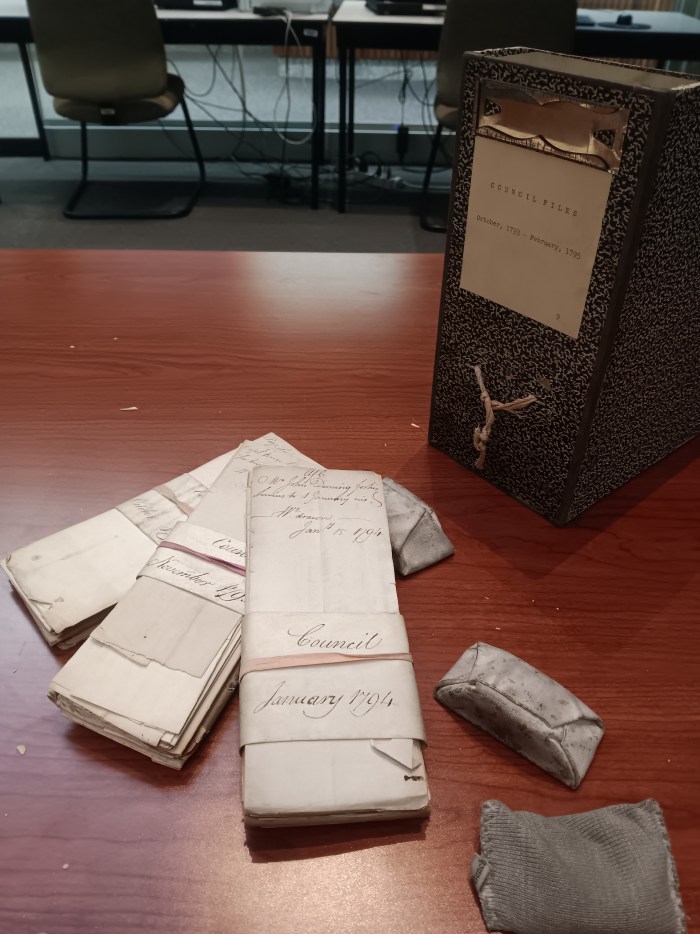
Before long they brought to me a box from the Council Files, covering October, 1793 to February 1795. This was held in an old-looking file box, possibly dating to the 1920s, which could mean this was the same housing the documents were in when examined by Edmund Pearson about ninety years ago. To my knowledge, no Tufts researcher since Pearson has examined these documents, so it was strange to think I was the next researcher after him, even after such a long time.
The documents were held in little month-to-month bundles tied by sometimes colorful ribbons. Archival storage philosophies can vary for how to best house a collection like this, with some favoring unfolding and even ironing old documents flat, and placing them in acid-free folders, while others leave old arrangements as-is. This collection was either an example of the latter, or they haven’t gotten to modernizing the Council Files’ storage yet.
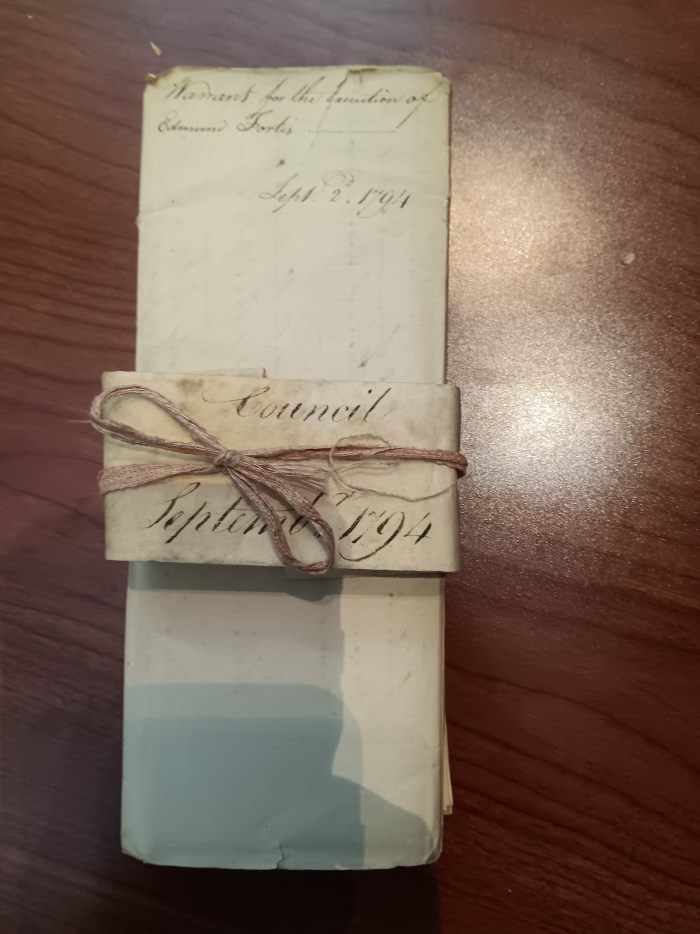
June, 1794
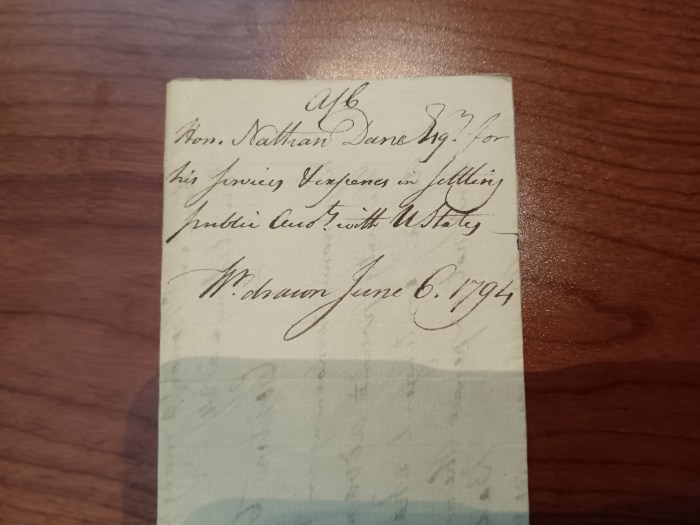
In any case, I started making discoveries almost immediately. On a document for an unrelated case from June, 1794, I found the name of “Hon. Nathan Dane, Esq.,” who was one of Henry Tufts’ two attorneys in the burglary case (called “Dana” in Henry Tufts’ book); it appears he was a common presence in criminal court in Boston at the time.
Later in the June bundle, I thought I had struck upon the whole collection of documents when I found this one. Addressed to “His Excellency Governor Saml. Adams, Esqr., Governor of Massachusetts, Boston,” it bore the description “Exemplification of the sentence against Henry Tufts. – June 27th 1794.” With palpable excitement, I unfolded this document, even taking out my phone to take a video, expecting to see Henry Tufts’ petition in his own handwriting before my very eyes.
Instead, this proved to be two documents which were unmentioned by Pearson. The shorter of the two documents is signed by one Jn. Tucker of Ipswich, June 20th, 1794, sending a document to Governor Samuel Adams about the case.
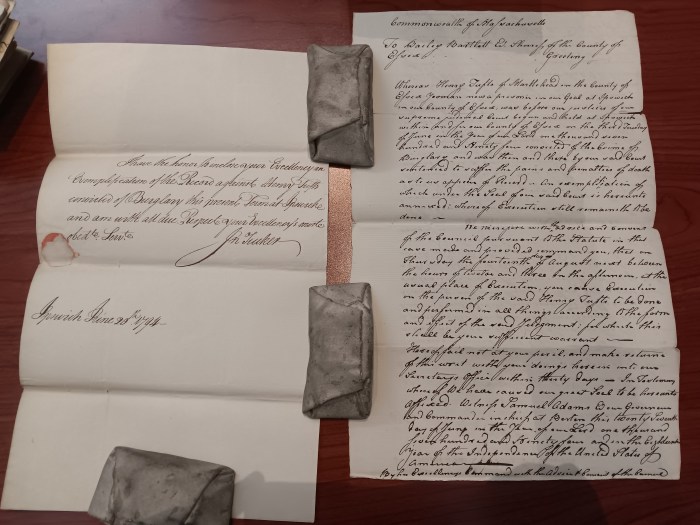
The accompanying document is addressed by the Commonwealth of Massachusetts to Bailey Bartlett, Esq., Sheriff of the County of Essex. The document confirms the conviction and death sentence for the fourteenth of August. Upon examining this document, it’s clear that this is not the exemplification letter itself, but a response to it. This letter is dated “this twenty seventh day of June,” making it more recent than the document sending the exemplification. It also makes reference to “an exemplification of which under the Seal of our said Court is hereunto annexed.” It appears that the mentioned exemplification was sent on to the Sheriff. Speculating for a moment, I suspect that this is a copy of a letter that was sent with the approved exemplification to the Sheriff of Essex County. The letter is instructing Sheriff Bartlett to perform the execution without fail, “with the advice and consent of the Council,” and stating also “Witness Samuel Adams Esq our Governor and Commander in Chief at Boston.” At this stage, Adams and the Council appear to have shown no hesitancy at approving the execution.
July, 1794
Henry Tufts’ petitions
Next I turned to July of 1794. Almost immediately I found the bundle cited by Pearson, inscribed “Petition of Henry Tufts for a reprieve – July 17, 1794.” I knew that now I was at last holding in my hands a document in Henry Tufts’ own hand. Anyone who studies or is interested in Henry Tufts should understand my excitement – aside from the book itself, this is perhaps the most tangible proof that exists today that Henry Tufts was a real person who lived and died, and that the experiences he describes in the book are largely true. It’s a holy relic of Henry Tufts, and I was now about to see it for myself!
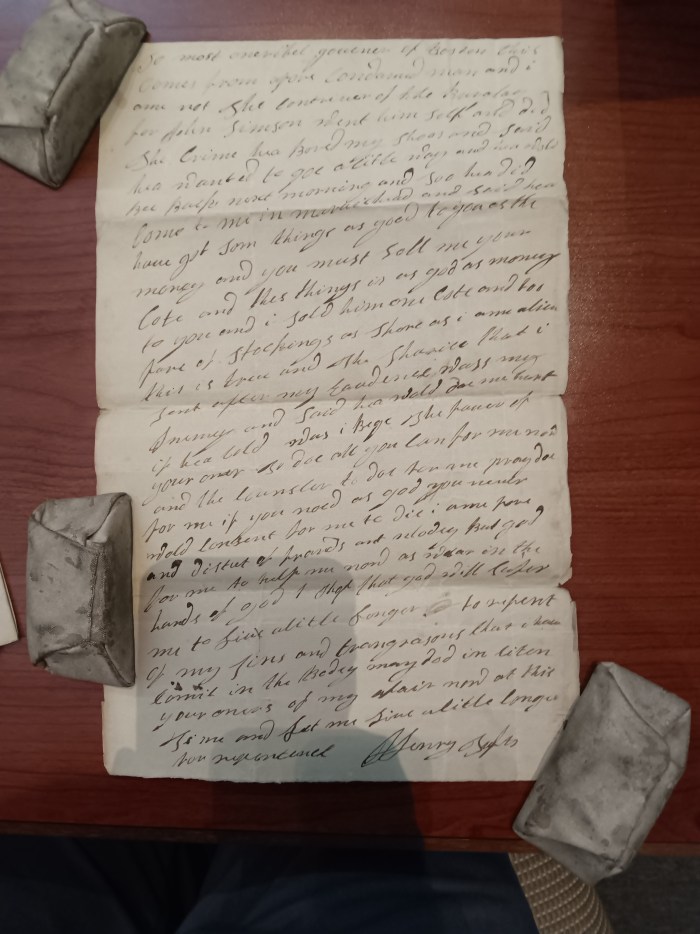
I opened the bundle, and sure enough, there it was in all of its glory, in elegant but less skilled handwriting than many of the other documents around it, with misspellings and all. The plea of “a pore condamd man” who was largely lacking in formal education. The document is larger than I expected, a good twelve inches or more in length, and on narrow paper. Speculating again: was odd scrap paper all that was available in the Ipswich jail for Henry Tufts? I recorded this video to show the document as a whole:
Also in this bundle, I found a curiosity unremarked upon by Pearson: A second copy of Henry’s petition, in neater handwriting and better spelling! They are possibly in the same hand at the start, as the writing has a similar slant particularly in the first few lines, but it gets smaller after the third line, and the text repeats itself by repeating the first name of John Simson on the fourth line, as if perhaps (speculation!) another person took up transcription of the letter for the writer of the first. I’ll speculate here that someone was helping Henry make a copy of his letter, and that at first they were telling him correct spelling, then gave up and wrote the rest of the copy themselves. The signature at the bottom also looks different, especially the Y in Henry. It would appear that the hand writing this one also provided Henry’s signature.
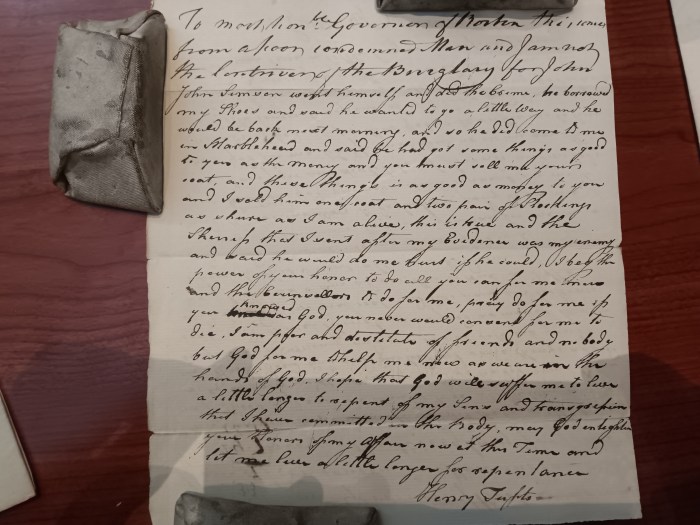
One wonders why Pearson failed to mention this second copy of the letter, as it also resolves Pearson’s occasional bracketed speculations on what the handwriting says when illegible. Pearson quotes “the Sheriff [?] that i sent after my evidence” and “i Bege the power [?]” and both of these turn out to be true to the text of the second petition document. Pearson is proved incorrect later in the document though with “nobody but god for me to help me now as [I am?] in the hands of god,” as this phrase turns out to be “we are.”
The back of the document also bears some small markings, particularly this arithmetic that doesn’t appear to add up. It seems that this document was written on used paper.
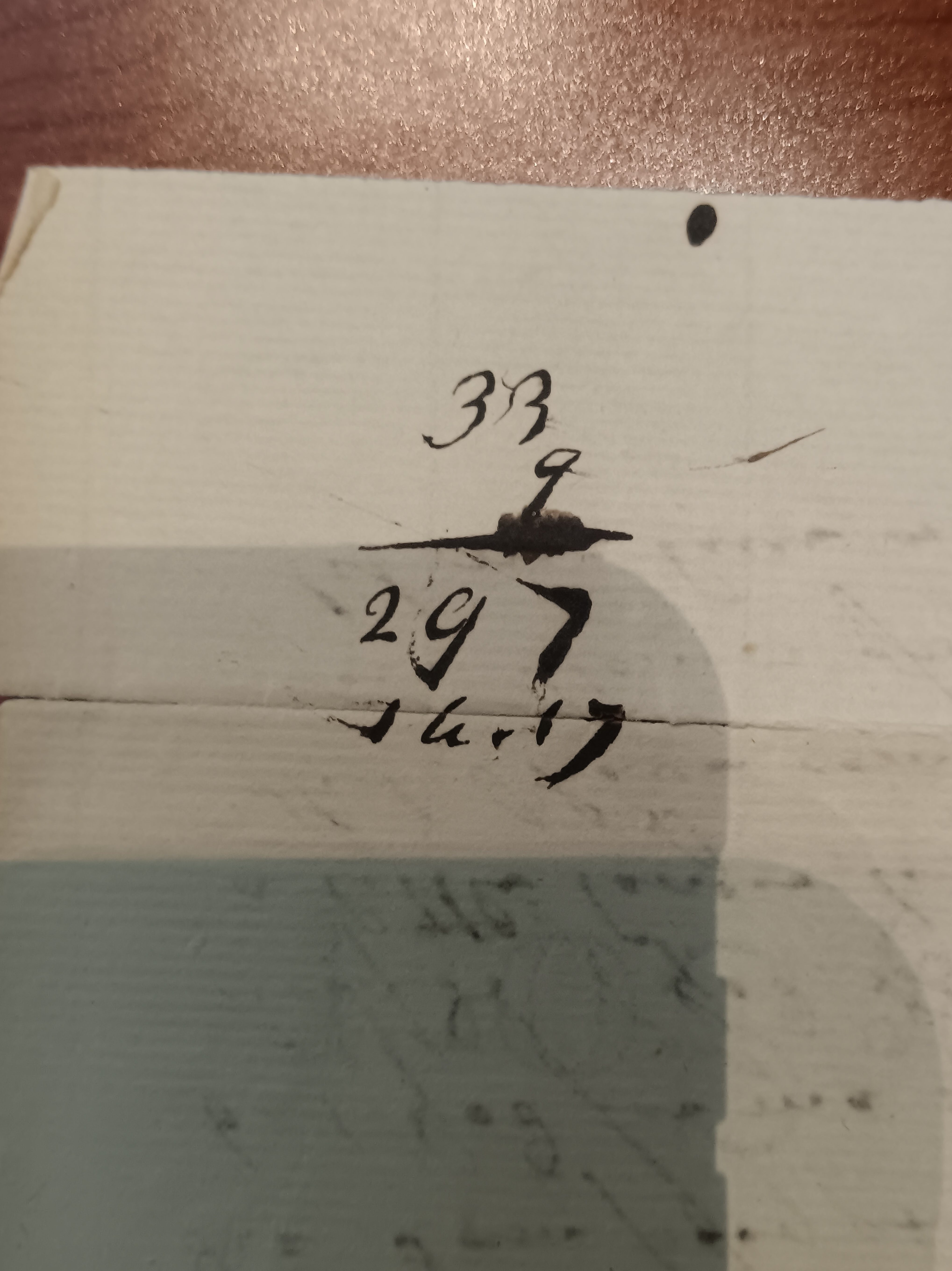
The real mystery here turns out to be why two copies are in the permanent record, especially since one of the two seems to have mostly been written by a different hand. I however will forbear speculation as to how this happened. One can imagine that possibly there was need for an additional copy, and they both ultimately ended up in the same file.
And before we move on, a few words about this letter itself. It’s a very humanizing document for Henry Tufts, and I really feel for him as he writes this. It’s inconceivably horrific to imagine facing your own death at the hands of the state, particularly for a comparatively minor offense such as this. Henry is terrified, and pitiful enough to bring tears to my eyes. “You never would consent for me to die,” is particularly wrenching. He’s reminding Governor Adams of the power he possesses, and asking him to consider if he really wants that. And remarkably, as we’ll see, it may have been this plea alone that saved Henry’s life.
Henry and Abigail’s Petition
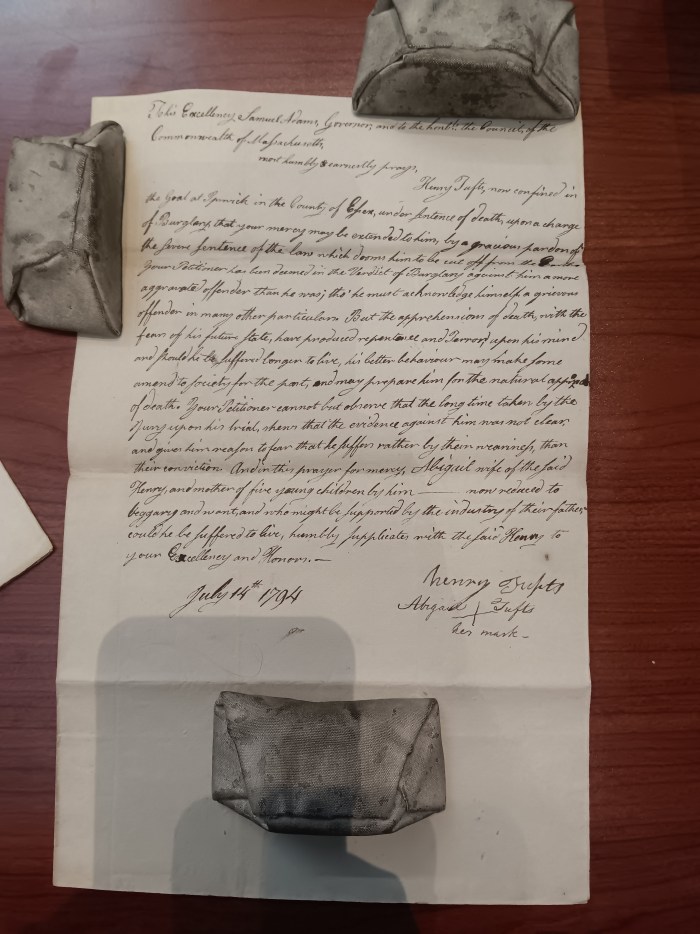
Next is the joint petition of Henry and Abigail, dated July 14th, 1794. It is not in the handwriting of the first copy of Henry’s petition, though his signature looks similar to that letter’s handwriting. Abigail, notably, has signed with a cross, and her name and the words “her mark” have been entered by a different hand. It appears that she was illiterate, which I believe was relatively uncommon even for women of her time.
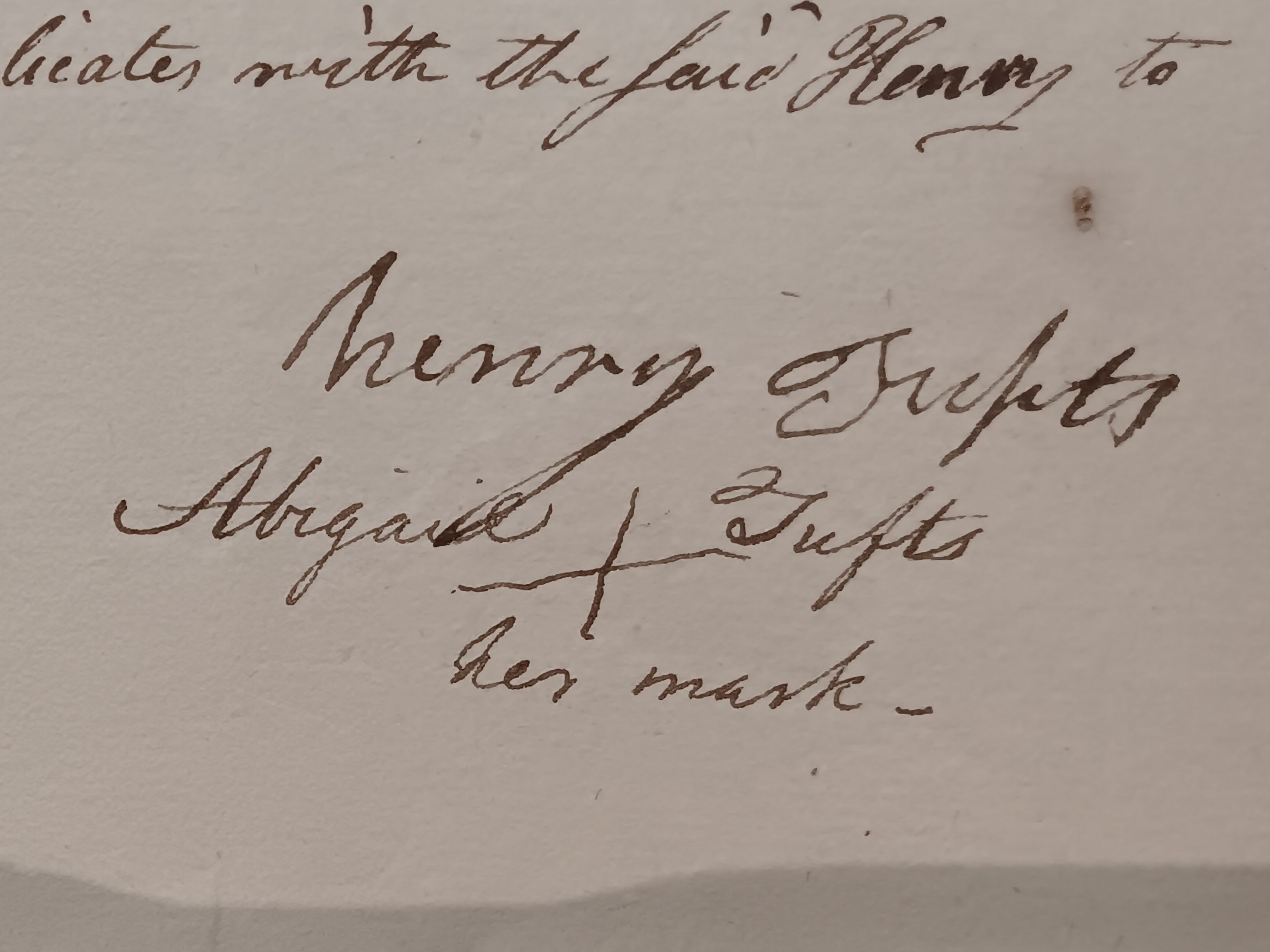
One notable part of this document is Henry Tufts mitigating his guilt in this case but owning up to having been generally bad in the past: “your Petitioner has been deemed in the Verdict of Burglary against him a more aggravated offender than he was; tho’ he must acknowledge himself a grievous offender in many other particulars.” Indeed. And the full story of that wasn’t told until 1807.
We also have a promise that remarkably, mostly turned out to be true in the end: “But the apprehensions of death, with the fears of his future state, have produced repentance and Terror, upon his mind and should he be suffered longer to live, his better behavior may make some amend to society for the past, and may prepare him for the natural approach of death.” We know from his book and the historical record that he in fact never was convicted of another crime, and, according to his stated purpose in his book anyway, wanted his example to make society better. And that resolve started here.
The letter speculates as well on the reasons for Henry’s conviction: “Your Petitioner cannot but observe that the long time taken by the jury upon his trial, when that the evidence against him was not clear, and gives him reason to fear that he suffers rather by their weariness, than their conviction.” This bears out his later description of the long period of the jury’s deliberations, and the petitions of John Thurston, as we will see shortly.
Finally, the letter includes heartbreaking details about Abigail: “Abigail wife of the said Henry, and mother of five young children by him – now reduced to beggary and want, and who might be supported by the industry of their father, could he be suffered to live.” This statement also cuts to the heart, and makes me hate Henry for what he would ultimately do to Abigail. He would never support her or these children – who are barely mentioned and never numbered in the book – ever again, even after his ultimate escape, breaking off their association through what could be termed a “Dear Jane” letter. He really could be a bastard.
John Thurston’s Petition
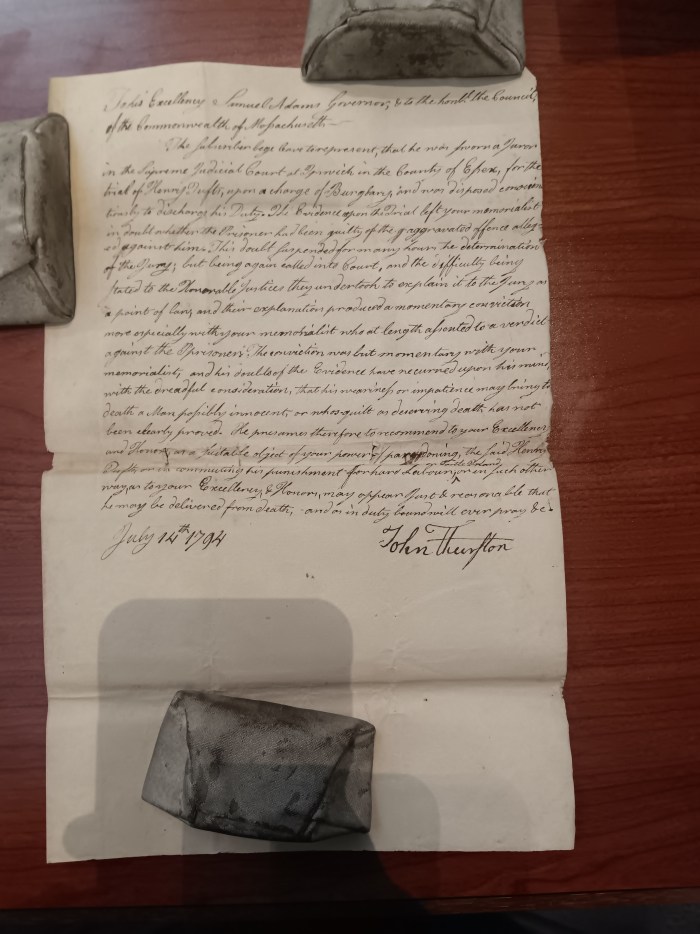
Also in this bundle, as promised by Pearson, is juror John Thurston’s petition, dated July 14th 1794. One thing Thurston’s presence here does is demonstrate just how good Henry’s memory must have been, and also his almost certain (if ever in doubt) collaboration with his apparent ghostwriter on his book. It cannot have been possible to easily research these records at the time, and Thurston is not mentioned in any contemporary news article I’ve seen. But Henry Tufts mentions juror Thurstin (his spelling) objecting to the proceedings and writing a petition on his behalf. And here’s that petition! Henry Tufts has accurately remembered the name of a man who he met only once, if at all, who was instrumental in the behind the scenes work of getting his sentence commuted.
Thurston’s petition bears out the long deliberation described by Henry Tufts and in Henry and Abigail’s petition, explaining, “The Evidence upon the Trial left your memorialist [Thurston] in doubt whether the Prisoner had been guilty of the aggravated offence alleged against him. This doubt suspended for many hours the determination of the Jury; but being again called into Court, and the difficulty being stated to the Honorable Justices they undertook to explain it to the Jury as a point of law, and their explanation produced a momentary conviction more especially with your memorialist who at length assented to a verdict against the Prisoner. The conviction was but momentary with your memorialist, and his doubts of the Evidence have recurred upon his mind, with the dreadful consideration, that his weariness or impatience may bring to death a man possibly innocent, or whos guilt as deserving death has not been clearly proved.” I really feel for Thurston here, clearly wracked with conscience for his role in possibly putting a man to death. It may have taken great moral courage for him to stand up to this wrong, and he has my admiration.
A Stay of Execution
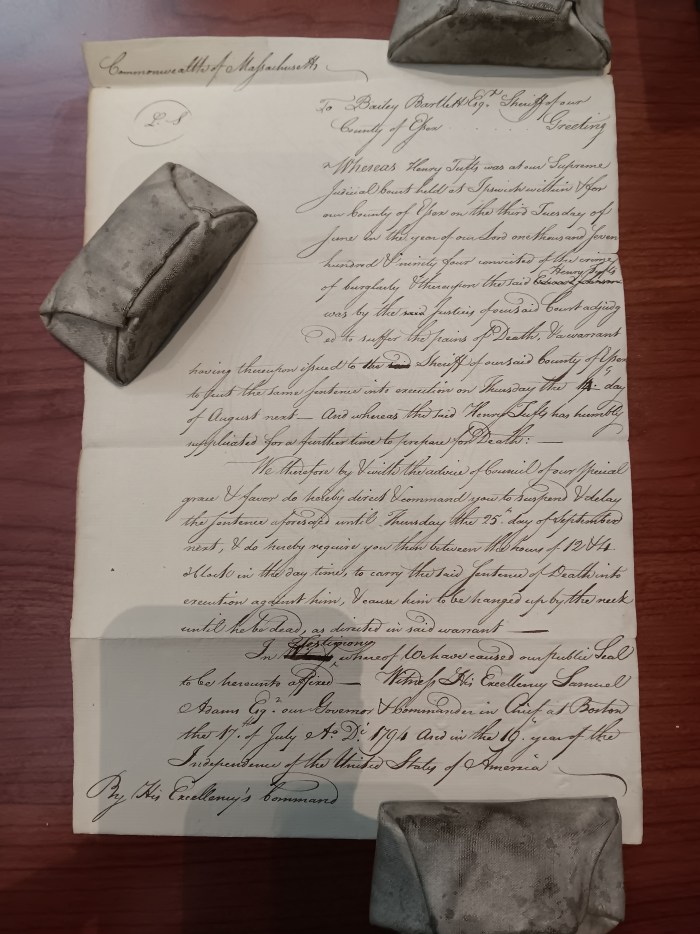
The final document in the July bundle is an official one, dated “the 17th day of July, A.D. 1794 and in the 19. year of the Independence of the United States of America.” This is another document from the Commonwealth of Massachusetts, sent “By His Excellency’s Command.” This document shows the tide turning in Henry’s favor. This letter is again addressed to Sheriff Bartlett of Essex County, and cites “whereas the said Henry Tufts has humbly supplicated for a further time to prepare for Death,” that “we therefore by & with the advice of Council of our special grace & favor do hereby direct & command you to suspend & delay the sentence aforesaid until Thursday the 25th day of September next, & do hereby require you then between the hour of 12 & 4 o’clock in the day time, to carry the said Sentence of Death into execution against him, & cause him to be hanged up by the neck until he be dead, as directed in said warrant.” Notable here is the acknowledgement of Henry’s petition as the cause for the stay of execution. It appears that Governor and Council were really reading and considering them. Also notable though is the fact that at this point on July 17, an actual commutation of sentence does not appear to be forthcoming. Whether Henry was informed of this or not – and his side of the story doesn’t mention it – one can definitely believe at this point that for a time anyway, he had no reason to believe he would live much longer than August 14, 1794.
September, 1794
At this point I had exhausted all of the documents promised by Pearson, but decided it was worth looking forward over the next few months in the record to see if there was anything else. There was no August, 1794 bundle in the collection (I found out why later – read on), so I went straight to September. There were in fact more documents to be found there.
Sentence Commuted
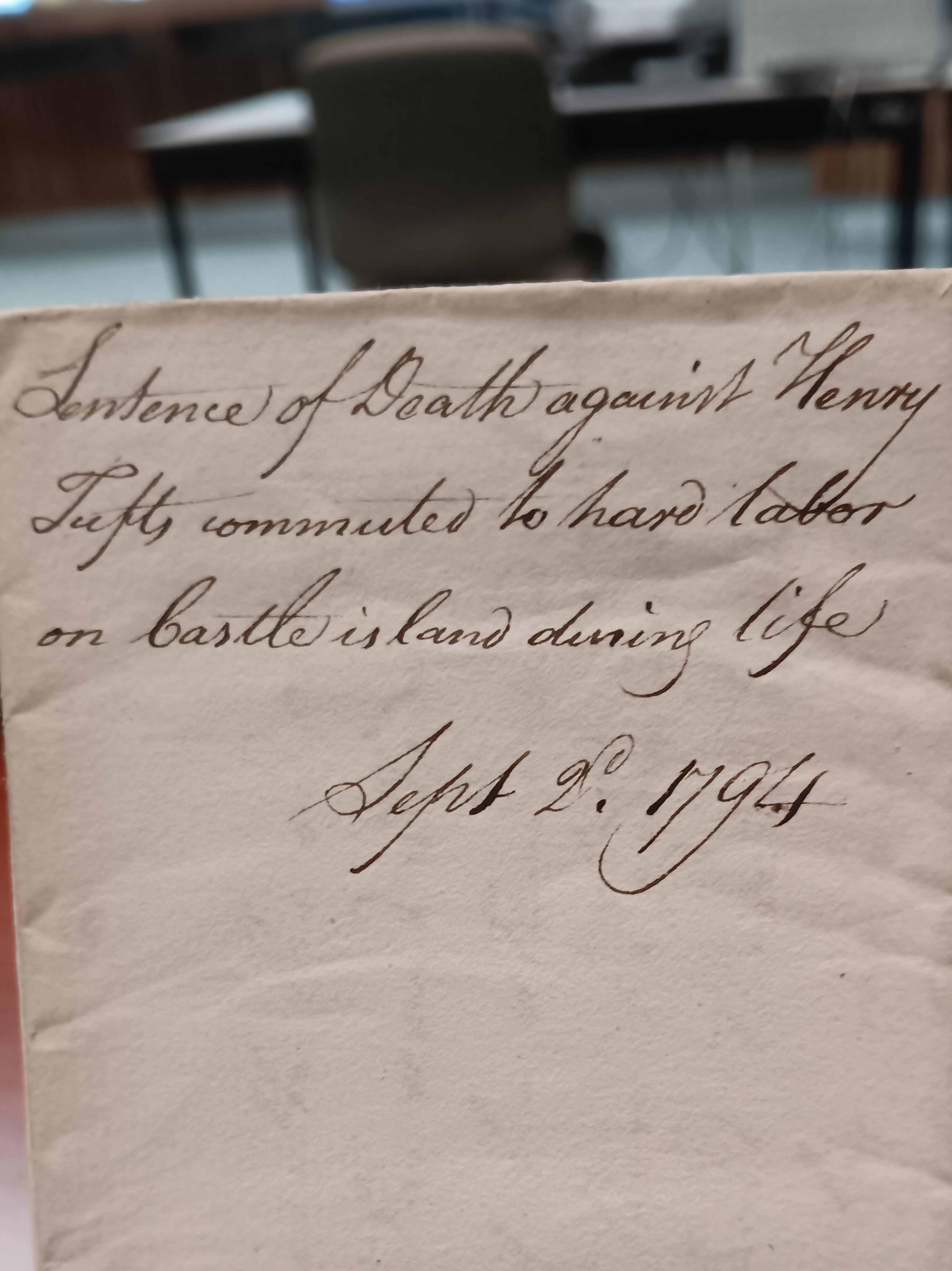
In the September bundle, I almost immediately found this item: “Sentence of Death against Henry Tufts commuted to hard labor on Castle island during life, Sept 2d. 1794.”
A second (first) Thurston petition
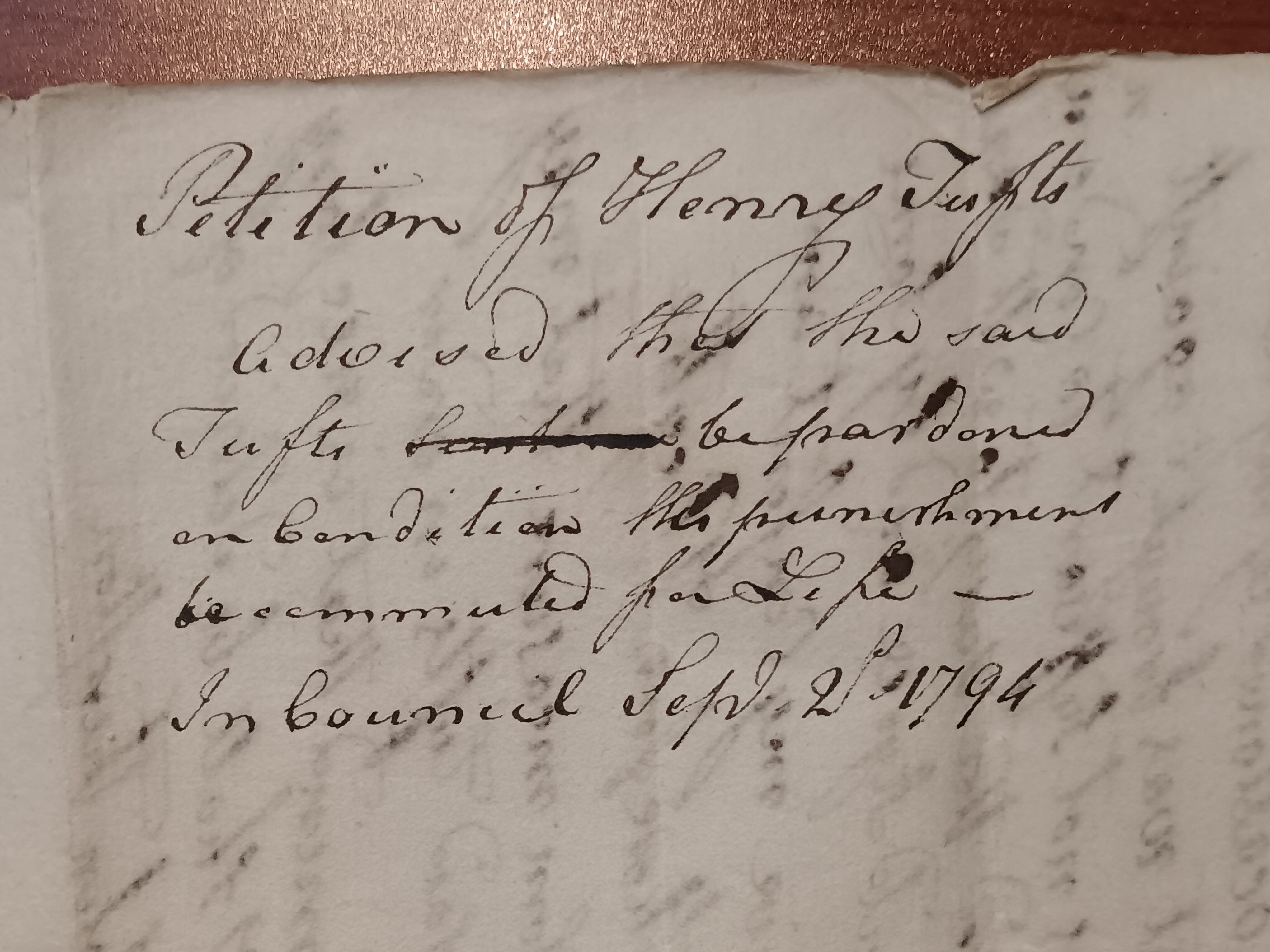
Unfolding these documents, the first thing I found was a document that proved to be chronologically out of place. On the back it was addressed “His Excelency Samuel Adams Esqr Governor of this Commonwealth, Boston.” The document itself is dated “June the 25th yr. 1794,” and it turns out to be a first petition by Thurston. Chronologically, this makes it one of the earliest documents in the saga, but somehow it came to be here. It’s clearly meant to be in this section too, as it also bears an added note saying “Petition of Henry Tufts, Advised the said Tufts be pardoned on Condition his punishment be commuted for Life – in Council Sep 2d 1794.” At some point it was assigned or used during September, so it remains there to this day.
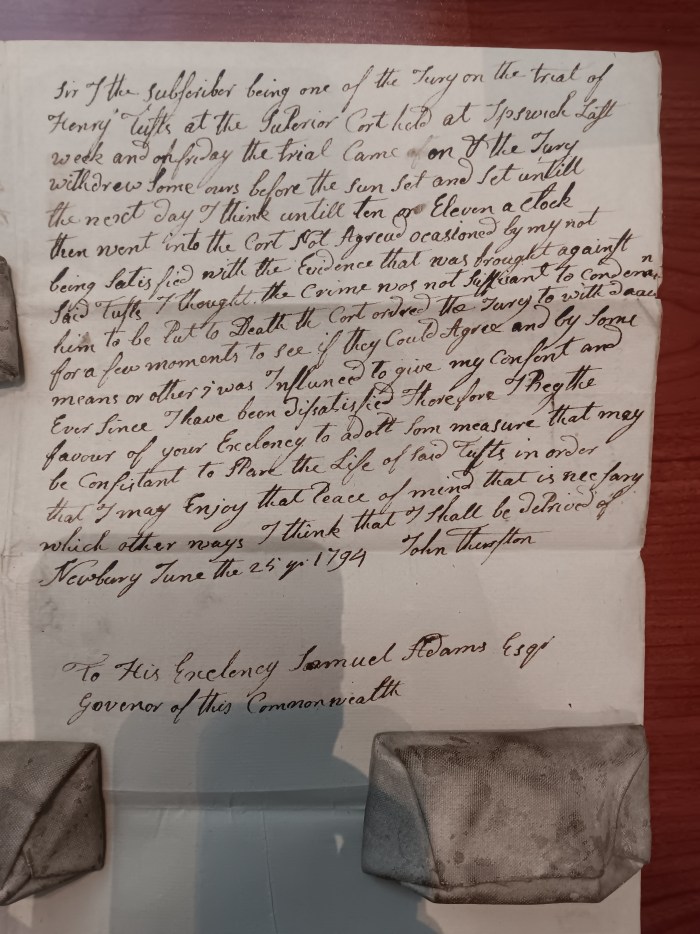
The text of Thurston’s plea contains more details about the grueling deliberations: “the Jury withdrew Some ours before the Sun Set and Set untill the next day I think untill ten or Eleven a clock then went into the Cort Not Agreed occasioned by my not being satisfied with the Evidence that was brought against said Tufts I thought the Crime was not sufficiant to condemn him to be Put to Death the Cort ordered the Jury to with draw for a few moments to see if they Could Agree and by Some means or other i was Influnced to give my Consent and Ever Since I have been dissatisfied.” Thurston once again shows a strong conscience, begging Henry Tufts’ life be spared, “in order that I may Enjoy that Peace of mind that is necessary which other ways I think that I shall be deprived of.” Thurston was a good man. I don’t know anything else about what we can learn of him in the historic record, but I think Henry Tufts was lucky to have him, and it appears he may have had some influence, since his petition appears to have been under consideration at the time of the commutation of sentence.
The commutation document
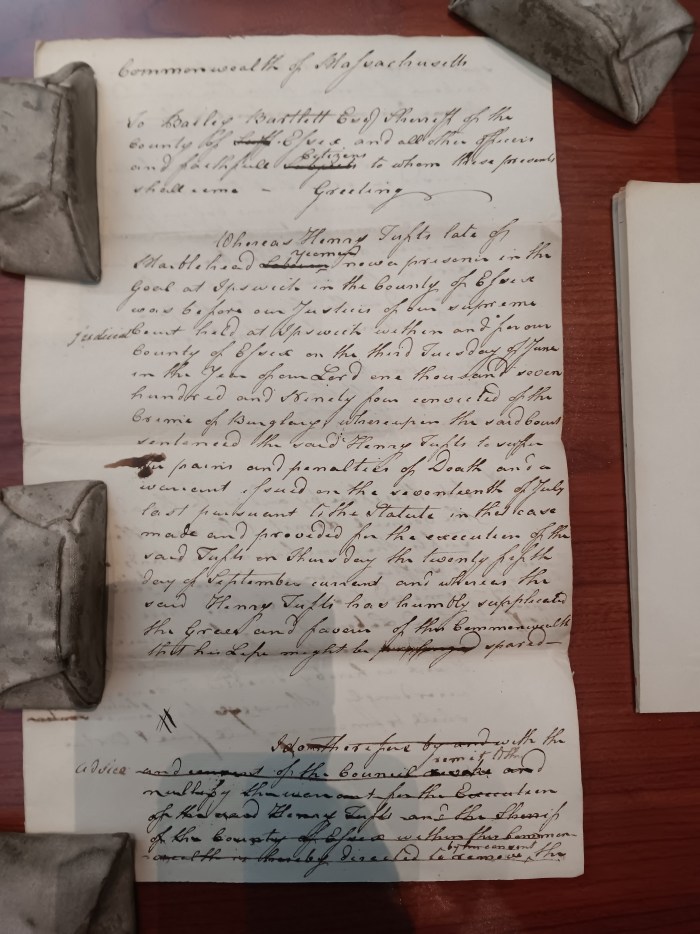
The second document in the September bundle is a rough draft of a letter written again to Sheriff Bartlett of Essex County, dated September 2, 1794. It bears several corrections and crossed out paragraphs, presumably preceding an actual clean copy that was sent to the Sheriff. It mentions specifically that “the said Henry Tufts has humbly supplicated the Grace and Favor of this Commonwealth that his life might be spared.” It appears that Henry’s own petition specifically must have carried a lot of weight.
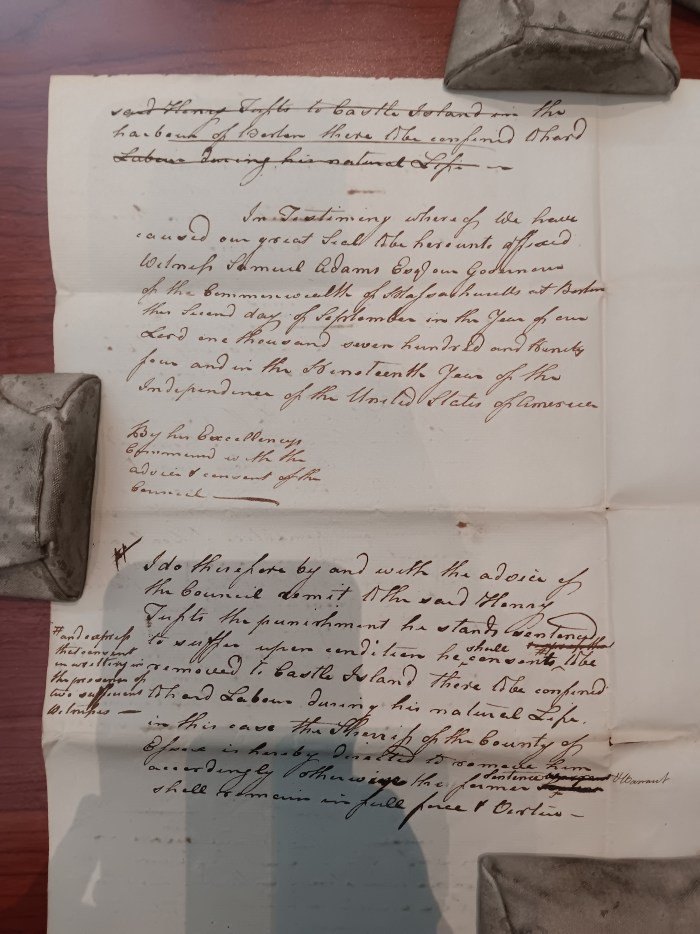
Following crossed out paragraphs and boilerplate attestations of authority, the document concludes, “I do therefore by and with the advice of the Council remit the said Henry Tufts the punishment he stands sentenced to suffer upon condition he shall consent# to be removed to Castle Island there to be confined to hard labor during his natural Life. in this case the Sheriff of the County of Essex is hereby directed to remove him accordingly otherwise the former sentence + warrant shall remain in full force + [illegible].” Beside it is an addition, “# and express that consent in writing in the presence of two sufficient witnesses.” Henry Tufts’ life has been finally spared, as long as he agrees to accept life imprisonment instead, in writing. I don’t know if Henry’s signed document still exists, but it is not in this collection.
It’s notable also that this document, dated September 2, precedes Henry Tufts’ stated date in his book. He states that he was informed of this on September 18, so the timeline once again matches up very well with Henry’s later statements, giving them a greater air of truth.
January 1795 – Transportation to Castle Island
One might think that that would be the end of Henry Tufts materials in this particular collection. After all, he’s got no more petitions to make, and his sentence is a done deal. He was sent to Castle Island. But – he was sent to Castle Island! One thing I noticed as I proceeded through the collection was that occasionally there were records related to sending prisoners to the island. I wondered – could Henry’s be here too? I proceeded on through the records quickly looking for one related to him. I didn’t know when the transportation took place of course, though Henry himself says it didn’t take long after September for him to be transported there. After searching through the last few months of 1794, I finally found it in January, 1795, though the record itself lists Henry’s transportation date as September 22, 1794.
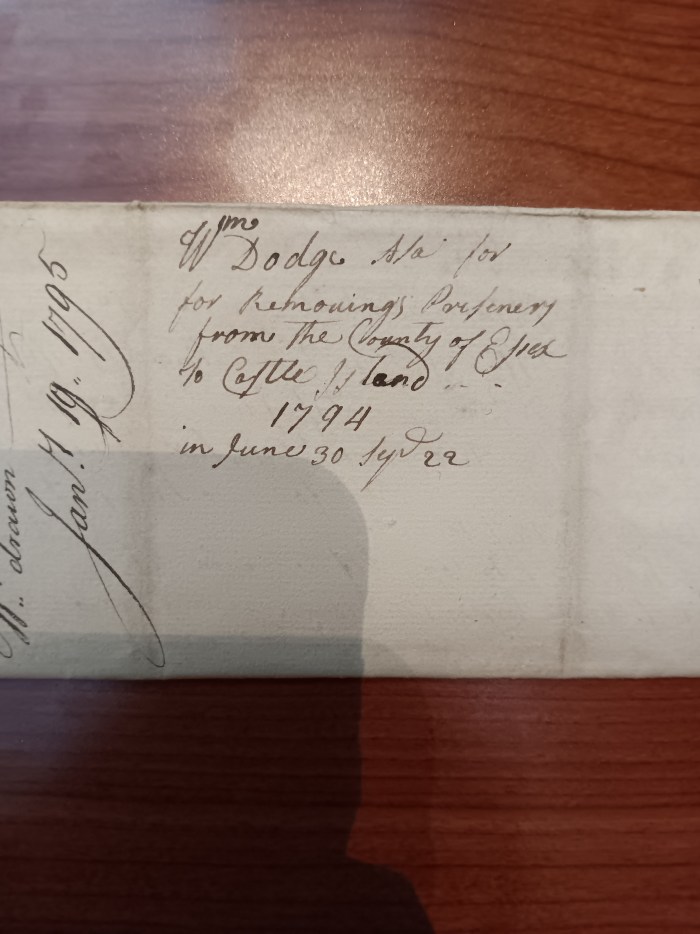
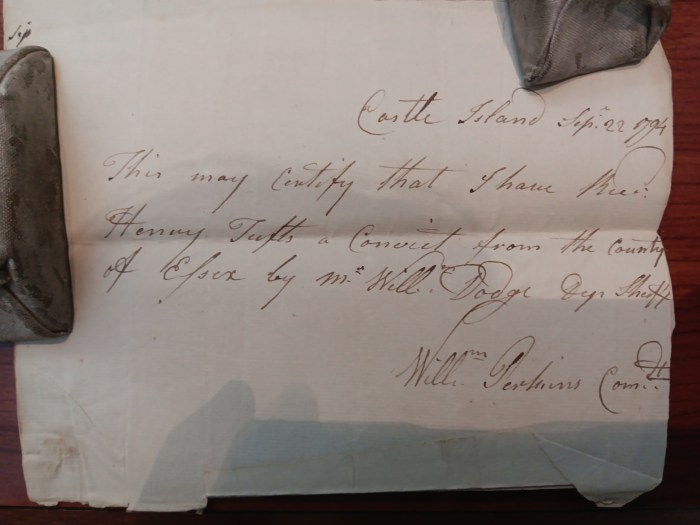
The outside of the document reads, “Wm. Dodge A/a [?] for Removing Prisoners from the County of Essex to Castle Island, 1794 in June 30 Sept 22.” On the inside we find two records of transporting convicts to the island, first a John Brooks in June, and then Henry on September 22. Both convicts have a list of transportation expenses, and a receipt issued by William Perkins, Comdt., presumably the officer in charge of prisoners on the island. Henry’s reads: “Castle Island Sep. 22 1794, This may certify that I have Recd. Henry Tufts a Convict from the County of Essex by Mr. Willm. Dodge Dep Sheriff, Willim. Perkins, Comdt.” It’s remarkable to put an actual date on Henry’s arrival at the Castle.
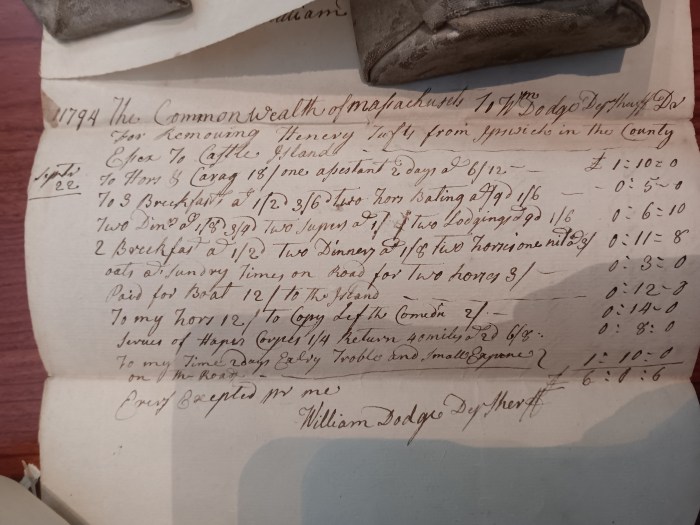
Also of interest is the receipt for expenses to William Dodge, which come to at total of £6:0:6 (I am uncertain about how expensive this may have been), and include items like multiple breakfasts and dinners (I don’t know what we can conclude from these totals about whether they were covering Henry’s meals, or how many people were on the job for this assignment), and “to my time 2 days.” We’ve also got expenses for horses and carriages, boats, and apparently a return of 40 miles for Dodge, which sounds about right for the distance between Boston and Ipswich today. Overall, another excellent bit of minutiae to add to our understanding of Henry Tufts’ real-life adventures. And to brag for a moment, it’s a real addition I’ve made to the discovery of Tufts-related primary documents, since Pearson makes no mention of it. That alone makes the Boston trip worthwhile!
Pardon Files
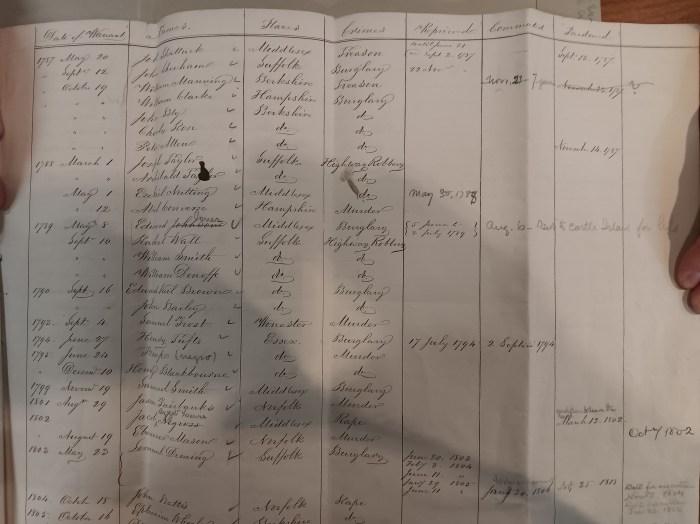
I also viewed the Pardon Files while visiting the archives, which include a more official record of the proceedings surrounding Henry Tufts’ travails with the law in Massachusetts. It is not in great detail here, merely described in the Abstracts (1780-1878 Abstracts: Gov Council Main Office: Council Pardon Files: 313 / B / 15 / 4-6). Henry’s details are listed in a table: his crime is Burglary, with his Warrant date of June 27, Reprieve date of July 17, and Commutation date of September 2.
Council Records
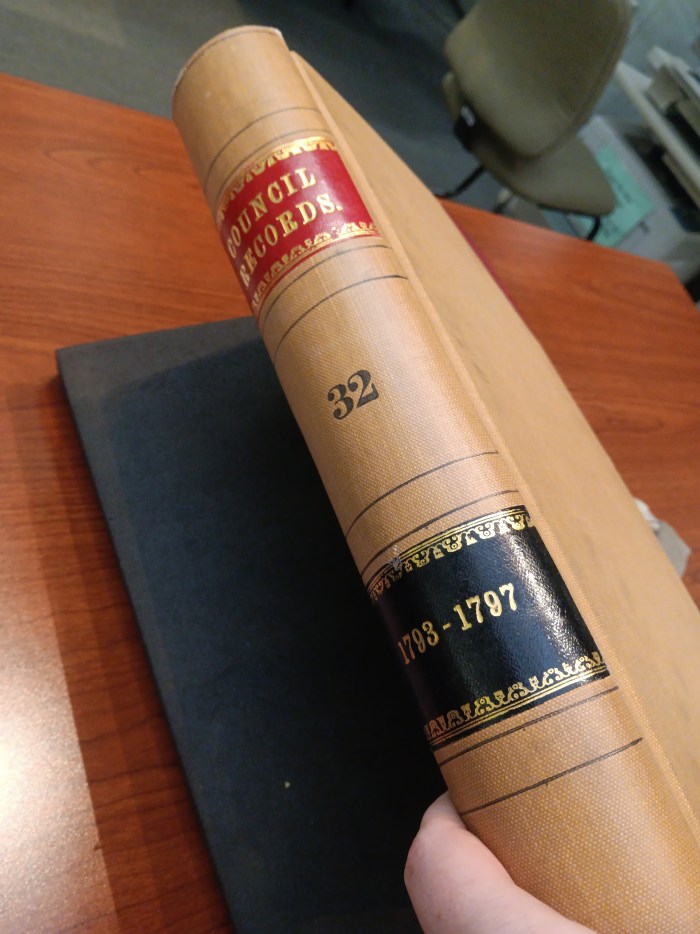
Finally, there was the Council Records book (Vol. 32, 1793-1797), which is another source showing the progress from death sentence to postponement to life imprisonment on Castle Island.
The book is arranged by dates of the Council’s meeting, detailing all of the business of that particular day, with the signatures of the Council members at the end of each day’s business. And here we start to see the shape of the proceedings, why things happen on certain dates in Henry’s case: all of the bundles in the Council Files, all of the important dates of decisions and warrants, are corresponding to days and months of the Council’s meeting: the original warrant is issued on June 27 because that is a Council meeting day; Nothing happens between the Reprieve on July 17 and the Commutation on September 2 because the Council wasn’t meeting then. And this also explains why there are no documents in the Council Files for August – there appears to have been a summer recess, with the new execution possibly intentionally set for after the Council will meet again, allowing for plenty of time to reconsider Henry’s plight!
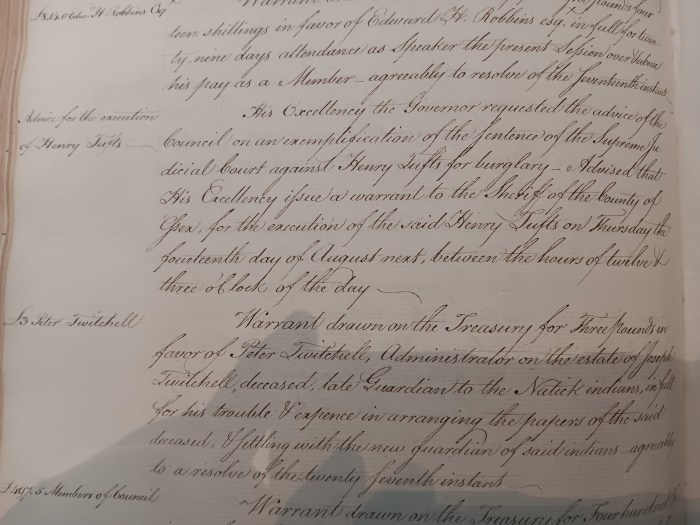
The record for June 27 shows the approval of the death warrant: “His Excellency the Governor requested the advice of the Council on an exemplification of the sentence of the Supreme Judicial Court against Henry Tufts for burglary – Advised that His Excellency issue a warrant to the Sheriff of the County of Essex, for the execution of the said Henry Tufts on Thursday the fourteenth day of August next, between the hours of twelve + three o’Clock of the day.”
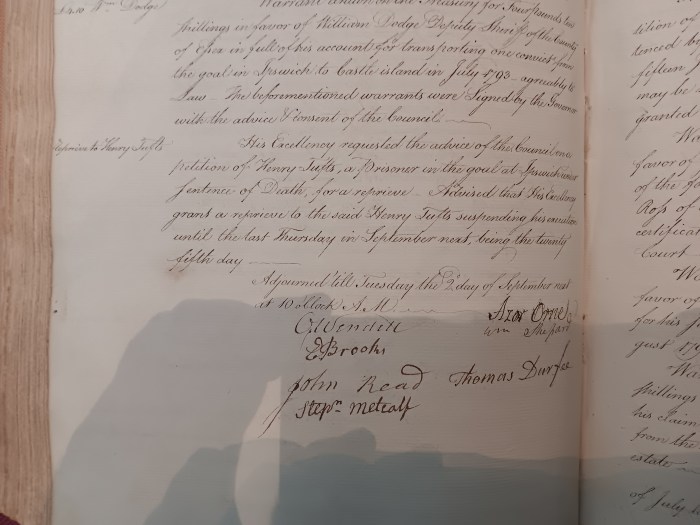
July 17 as expected includes the decision to postpone the death sentence, with Henry Tufts being the last item of business for the day: “His Excellency requested the advice of the Council on a petition of Henry Tufts, a Prisoner in the goal at Ipswich under Sentence of Death, for a reprieve – Advised that His Excellency grant a reprieve to the said Henry Tufts suspending his execution until the last Thursday in September next, being the twenty-fifth day. — Adjourned till Tuesday the 2d Day of September next, being the twenty fifth day.” When viewed in this context, the temporary stay makes complete sense. It was the last item on the last day before a recess, already leaning towards sparing Henry’s life, putting the execution date well after their next meeting when they could think about it again. Though, if Henry is to be believed, he was not informed of this and was left quite anxious on August 14, imagining his death to be imminent.
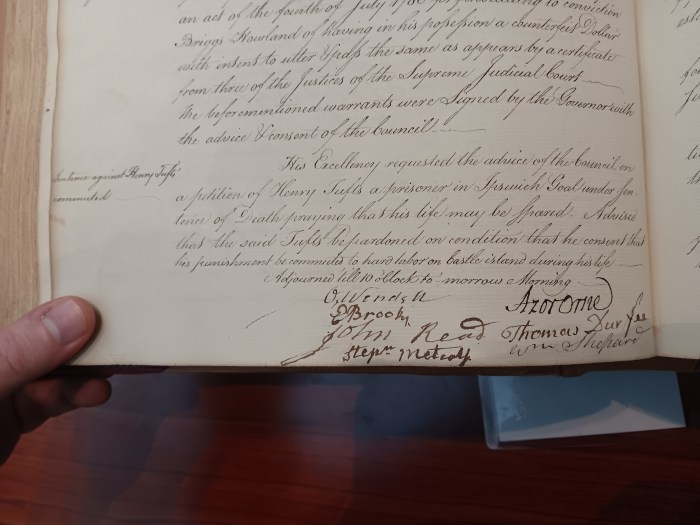
The September 2 meeting finally decides on the commutation, once again saving Henry for the last item of the day: “His Excellency requested the advice of the Council on a petition of Henry Tufts a prisoner in Ipswich Goal under sentence of Death praying that his life may be spared. Advised that the said Tufts be pardoned on condition that he consent that his punishment be commuted to hard labor on Castle Island during his life.” Here was the first place it was recorded that Henry’s life was to be spared, ensuring his literary legacy which led me to be researching him there in Boston in the first place.
Provisions for Convicts
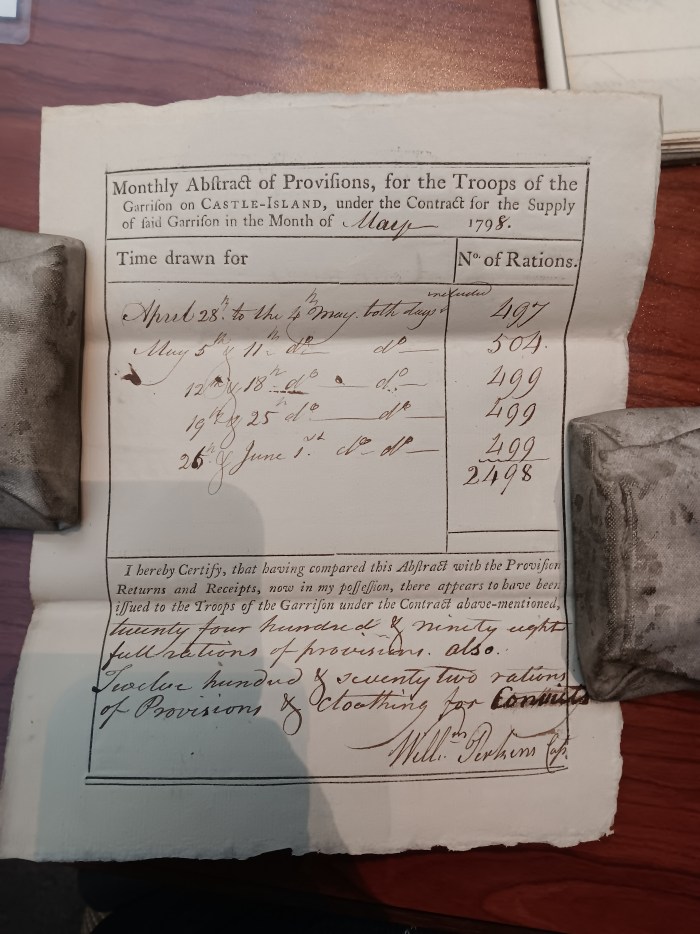
I didn’t see any other Henry Tufts-related documents there in the archives that day. There may be others, but between me and the archivists, this was all I could find. Looking further on in the Council FIles to 1798, I tried to find things about closing Castle Island prison and the fates of the prisoners there. I did not find that, but in May I located this “Monthly Abstract of Provisions, for the troops of the Garrison on CASTLE-ISLAND,” which includes this statement of “twelve hundred & seventy two rations of Provisions & cloathing for Convicts,” with the signature of William Perkins again, still in command of the prison. Henry Tufts perhaps would have laughed at the assertion that provisions and clothing were delivered for the convicts, as he complains greatly of cold and starvation while confined there.
In Pearson’s footsteps – more court records
The archivists also found for me the remaining court records cited by Pearson about Henry’s April depredations in 1794. These turn out to be digitized, also available on FamilySearch, and are from Suffolk County Court. I was searching mistakenly only in Boston when I did my own search.
Still missing – the Death Warrant
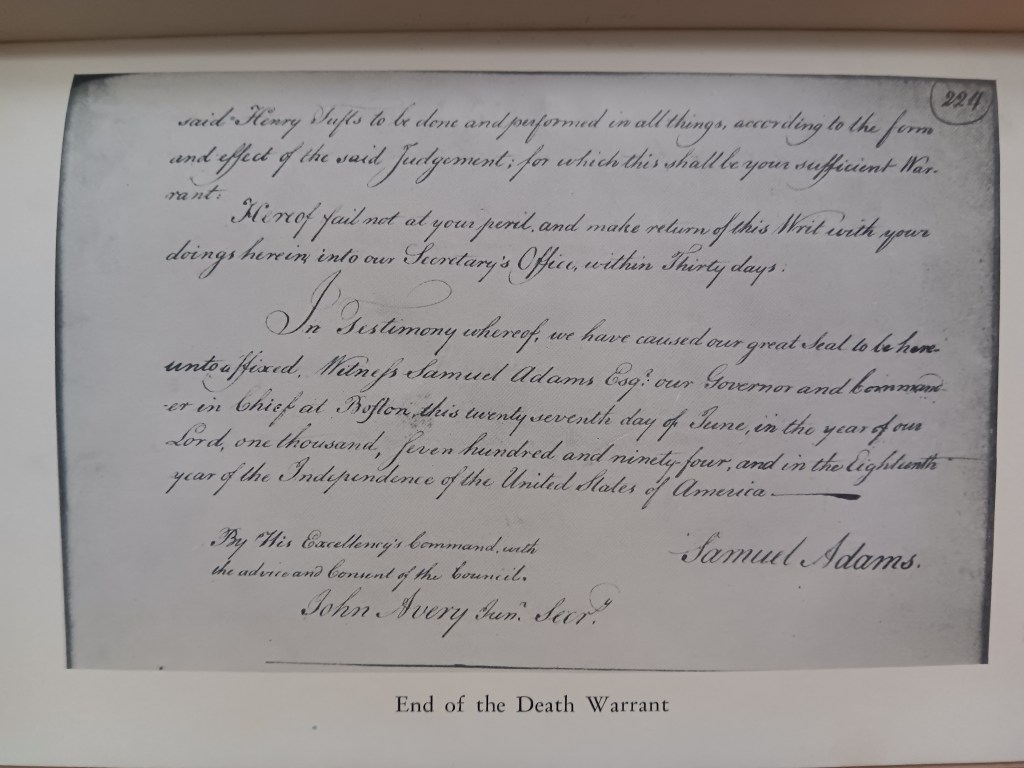
There only remains one Pearson document now unaccounted for: the Death Warrant. Pearson includes an image of its final page, and says nothing about where he located it. Judging from the assistance I received at the State Archives, I do not believe it is kept there. Tantalizingly, the Archivists drew my attention to a number in its corner – 224. It appears to be in a bound volume, though the location of the volume is unknown. I have contacted Essex County and asked if they have any documents this old still in their possession, and have so far received no reply. Judging from what we’ve learned in multiple documents in the State Archives though, I believe Essex is where it most likely resides, as the Council Records frequently refer to sending it to Sheriff Bartlett in Essex. I still hope to locate this document. I suspect the “exemplification” alluded to in some of the documents as well (if it in fact proves to be a different document from the death warrant at all) is probably there as well.
Always missing – Other petitions
Neither Pearson nor I found any trace of additional petitions, such as those mentioned by Henry which were sent by the students of Harvard, or the ladies of Ipswich. It would have been remarkable to see these, but there’s no trace of them even by mention. There still exists a remote possibility of a petition in Harvard’s archives from Henry requesting they speak on his behalf though, which is a matter worth pursuing.
Visiting Castle Island
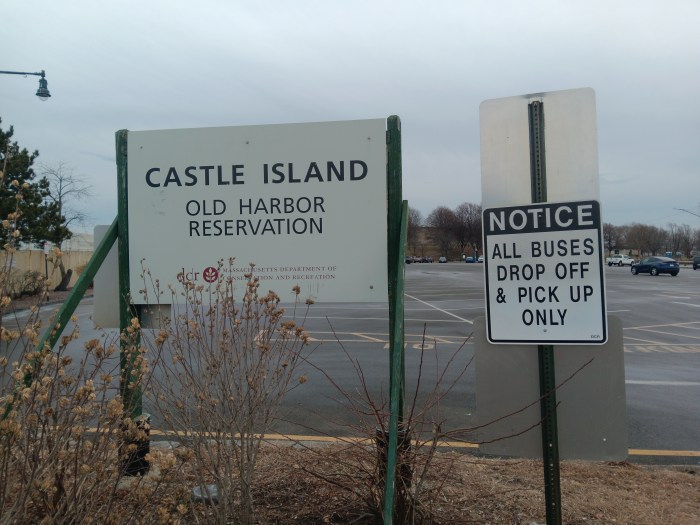
As I left the Archives, it was nearing lunchtime. I told the archivist I was heading up to Castle Island, and she told me about Sullivan’s Castle Island, a popular local restaurant located right there on the island. This was a strange thought since I’d just been ruminating on a life of misery and want while confined there.
I hit the road and drove north up the coast only a few miles, finding myself parking along a road with a long sidewalk leading towards the island, long since connected to the mainland, adjacent to the massive acreage of fill known as Logan Airport. I had in fact seen the island once before from the air, a year before this visit, while landing at the airport, when I had snapped this aerial view:

Today it was similarly gray, and led me to think once again about Henry’s life of privation on the island. It wasn’t a day of particularly bad February weather, but one could easily agree that it would not be a good place to suffer from lack of food and thin clothing. I recorded this video as I walked up there, thinking about how it compares to what Henry describes.

Arriving at the island, I found Sullivan’s to be closed for the season – my own minor privation of the day. The Civil War-era fort was also closed. This didn’t bother me too much though, since it’s not the same structure in which Henry was imprisoned.
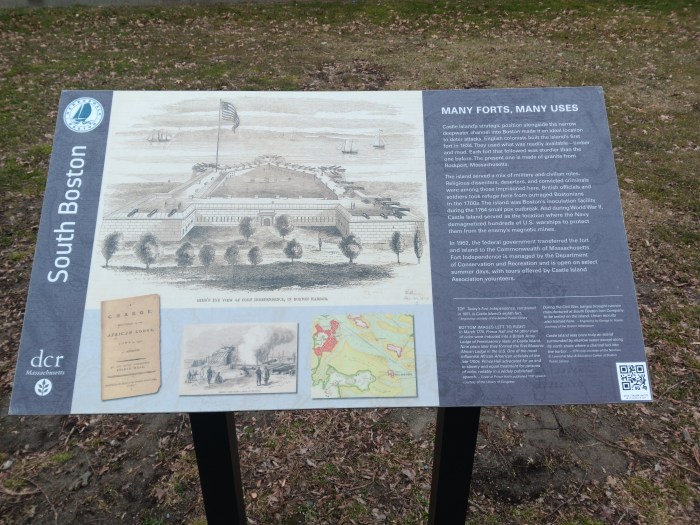
A plaque on the island explained its long and varied history – with the criminal prison getting barely a mention, and Henry’s Castle William not depicted or mentioned. I would have liked to see a mention of Henry Tufts, or the Flash Language, since we know from Henry that this obscure jargon was spoken here. I think visitors to the island would enjoy learning to call their jacket a jarvel or their dog a yapster. Of all of this varied history, it appears that today’s use of the land is the least historically significant – it’s now a recreation area. Though judging from its many uses, that would appear to be for the best.
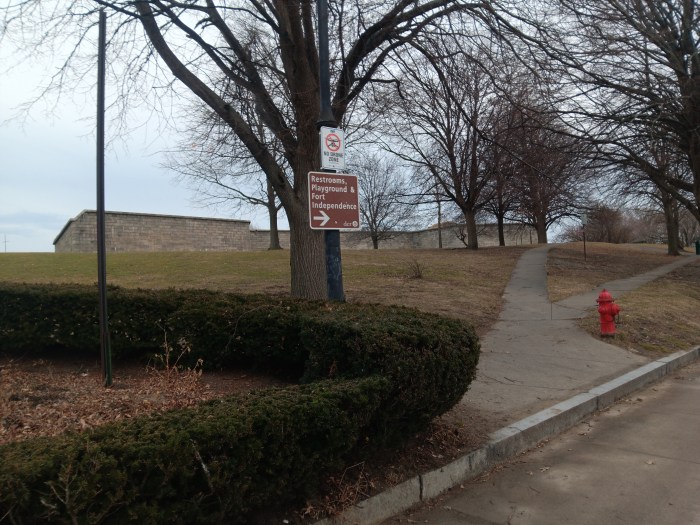
Walking around the island, it can be very difficult to imagine the reality of the prison Henry was conveyed to back in 1794. When you look towards the city, you see land connecting you with it, not the painfully distant freedom that Henry must have seen. The mowed lawns and sidewalks, the park benches, the trees, the children’s playground – all of this must look nothing like the “little tartarus or hell” that Henry experienced. His experience feels far more alive, more easy to understand when looking at the documents than while walking past a monument next to a recreational fishing pier while planes come in overhead and locals walk their dogs.
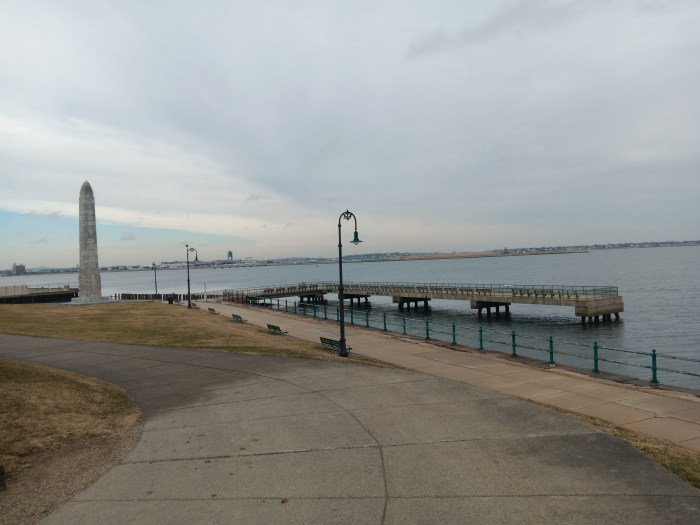
Henry’s spirit can rest easy. Castle Island Prison is deader than he is.
Book Review: Samuel Adams and the Vagabond Henry Tufts
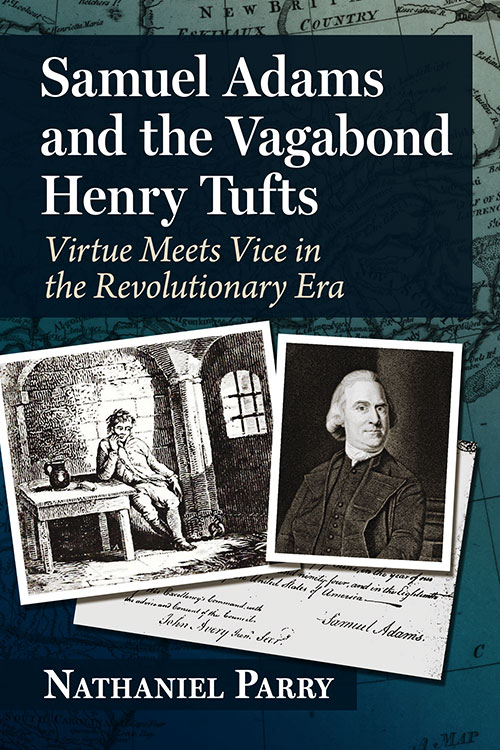
Henry Tufts has often been viewed by his detractors as an aberration, “black sheep of an otherwise respectable family,” as Tufts family genealogist and blogger Thomas Tufts has it. At the same time, Tufts’ contemporaries who championed American independence, “heroes, patriots divine,” as Henry Tufts himself describes them in his book, are lauded as something greater than human. One of these, now best known as the eponymous mascot of a beer company, was Samuel Adams. What two people could be farther apart than an “old Revolutionary patriot” as Edmund Pearson Describes Adams, and a man who is still considered such a disgrace that an article I authored – meant to be titled “In Defense of Henry Tufts” – was ultimately published under the title “Henry Tufts was a villain”?
Author Nathaniel Parry has taken up this question in his book Samuel Adams and the Vagabond Henry Tufts: Virtue Meets Vice in the Revolutionary Era, published by McFarland. The answer is that there’s far less of a distance between the two than you’d think, highlighting the importance of historical perspective, and showing Henry Tufts as a part of his environment rather than anything particularly out of place.
The book follows the careers of both men – Adams, in his early life, then in the days before the Revolution broke out, and his role in the Boston Tea Party, his being specifically considered a fomenter of unrest by loyalists, through to his days as the governor of Massachusetts and his unfortunate slide in his later years to near irrelevance – and Henry Tufts from his humble beginnings in his act of rebellion in stealing his father’s horse, to his life with the Abenaki of Maine, to his career’s great culmination in his death sentence and pardon by Governor Adams in Massachusetts.
The need for comparison between the two men is raised by this incident, the one and only time Adams acknowledged Tufts’ existence. This book was written with a specific goal of considering this particular moment, as it brings the two men into each others’ spheres, showing them as two sides of the same coin – one, a rebel against an imperial system, the other, a rebel against the standards of society itself.
Parry’s book is particularly instructive on the connection between Tufts and Adams, noting for example that Tufts and Adams were distant cousins by marriage. This fact was never acknowledged by either party, but could hint at a familial motive in the pardon. However, the most illuminating is the overall considerations Parry offers of the era itself. The state, and indeed the entire nation, had recently experienced what came to be known as Shays’ rebellion, a popular uprising in Western Massachusetts of war veterans who had risen up against local authorities; and the people involved were largely pardoned by Governor John Hancock in the end, in recognition of their lack of criminal motive. Indeed, writes Parry, capital punishment was becoming scarcer in Henry Tufts’ era, and increasingly frowned upon by Enlightenment thinkers who influenced founders such as Adams. Particularly instructive is a quotation from Adams himself around the same time as his Tufts pardon, stating that incarceration is favorable to “sanguinary punishments.”
That Adams was thinking along these lines, sheds great light on his motivations: Henry Tufts’ story is just a small part of a broader move against capital punishment at the time. And that’s not the only context Parry gives, either. Meticulously detailed are the incidents of unrest, violence, and rebellion of the era, which Adams often encouraged or found himself a part of. We consider also the apparently self-serving motivations of Henry Tufts’ service in the war, signing up for a bounty of land and money. These rewards were offered for the very reason Henry wanted them – for people like Henry, landless and poor, the lofty ideals of liberty were only theoretical. While the likes of Adams propounded these theories, the Henry Tuftses of the world needed more tangible promises to be on board. They did not necessarily lack virtue, but they couldn’t easily afford to be virtuous.
Simultaneously, Parry also considers Henry Tufts and Adams in relation to other spheres of society in their era – the role of women, Native Americans, and their attitudes on slavery. These serve to expand our perspectives on the world in which our story takes place. In each case and overall throughout the book, we receive a graying of the two figures and history itself – Henry becomes not so bad; Samuel Adams and the Patriot cause, more complex, with Parry ultimately calling for us to abandon labels like “heroes” and “villains” in history – everyone fits into a different space.
Edmund Pearson, the counterpart of Parry in the early twentieth century, was not fond of the idea of complicating established narratives, writing, “I detest the iconoclast, the shatterer of myths, the pedant who takes joy in exploding harmless and enjoyable legends,” but I think this is something of a strawman Pearson is excoriating here. What Parry does when he examines the story of Henry Tufts to get to the truth is to find it all more interesting than when we started. Parry starts with an interesting story of a Great Man pardoning a villain, and has found them both to be occupants of their own time, a time I now understand that much better as a result of reading Parry’s book. America, writes Parry in his final line, was founded on “idealism and crime,” which is a remarkable thought embodied by the book’s two central figures. What has been damaged other than our expectations?
The full biography of Henry Tufts has yet to be written; but for anyone wanting a broader perspective on the world occupied by Henry Tufts, Nathaniel Parry has you covered. And you’ll come away understanding Samuel Adams as a figure in history rather than a beer icon as well!
Disclosure: Review copy provided by the author. I was consulted for sources and thoughts, and am included in the acknowledgements as well as cited.
Order here: https://mcfarlandbooks.com/product/Samuel-Adams-and-the-Vagabond-Henry-Tufts/
Video: Every Edition of Henry Tufts
I take you on a guided tour of the ins and outs of all six different print editions of the book!
The “devouring element:” The growing myth of the Samuel Bragg fire
Over time, Tufts’ Narrative has been tied to the fate of its publisher’s print shop, and the printer himself, Samuel Bragg, Jr. The plain fact is that Bragg’s printing shop burned down; this is a fact not in dispute. The claim holds that the burning was intentional, and that the motive was revenge for publishing Henry Tufts’ book, and that the fire was started by an angry mob. We can see this legend grow over time and become a frequently repeated part of the book’s story, mostly thanks to Edmund Pearson. Here is a timeline of the claim and how it grew.
Thomas Wentworth Higginson’s essay “A New-England Vagabond” (1885) was the first and only piece of scholarship written on Henry Tufts or his book between the time of its publication (1807) and 1928. Higginson makes no mention of Bragg or the fire, focusing instead on the content of the book.
1928 saw Edmund Pearson first write of the book in an essay titled “A Yankee Casanova” in his volume Queer Books. He is aware of the fire, though his source is unknown, and here he writes:
“probably some horrified townsfolk thought that the Divine wrath was exhibited in a manner singularly wholesome, when the office of the printer was burned down, and when, not long after, the printer himself succumbed to disease and melancholia.” (Pearson 1928, 276)
This is admitted speculation on Pearson’s part about the public’s perception about the fire. “Probably” is certainly doing a lot of work, and the passive construction “was burned down,” gives a slight suggestion of agency. The office was burned down by what or whom? Pearson does not make any suggestion at this point, so he’s not yet drawing the clearest possible line between the two.
1930 finds Pearson still shy of making the complete claim, though he is nearer to it:
“New Hampshire promptly shut down upon Tufts: the printing office which issued this book was burned, three or four years later, and the printer died of a broken heart. A manifest judgment.” (Pearson 1930, xi)
So Pearson is saying here that the people of New Hampshire took little liking to the book, and the burning of the printing office is cited as evidence. “Was burned” is the passive phrase this time, leaving the door open just a crack for people to draw their own conclusions. It stops just short of claiming arson. Unless things happened considerably more slowly back then though, the word “promptly” isn’t warranted even if the implied causation is true, it being “three or four years later.”
The mid-20th Century saw little to no published scholarship on Henry Tufts. However, when the 1970s brought around the next round of publications, the claim begins to assert itself once again, working off of Pearson.
1974 brings us to Gordon M. Day and his article “Henry Tufts as a Source on the Eighteenth Century Abenakis.” Writes Day, “The printing office which issued it was burned a few years later, and the printer died, it is said, of a broken heart.” (Day 190). Day cites Pearson as a source for the claim, but has somewhat mitigated Pearson’s coy insinuations towards the claim of arson.
1976 sees the claim arise in full. George Carter, in an undated essay quoted verbatim in Tufts Kinsmen, writes, “failing to dissuade Bragg from printing more books, a mob burned the printery and its contents” (Tufts Kinsmen Association 39). Carter does not offer a source for this claim. However, Carter also writes in the same paragraph that “the author of this story does not know of any original edition now outstanding, but several reprints have been edited and printed.” This likely refers to the Pearson edition, as no other reprint existed at the time; and since Carter had not encountered an original 1807 edition, all of Carter’s knowledge of the text and the scholarship thereof likely begin and end with Pearson.
In 1993, Neal Keating published two works which promoted the claim to varying degrees. “The publisher had his printshop torched by a mob of outraged colonists,” (Foreword xviii) he writes in the Foreword to the 1993 Loompanics Unlimited reprint of Pearson’s edition of the text, citing the claim in the Tufts Kinsmen article above as a source. Keating also cites a contemporary account (Wadleigh, discussed below) of the fire, commenting breathlessly, “Was it arson? The letter is strangely silent on this” (Keating “Foreword,” xix). Strange, yes, perhaps. Stranger though is that Keating’s other publication of the same year says merely “three years after publishing Tufts’s narrative, Bragg’s entire operation burnt to the ground” (Keating “Land Pirate,” 183). The claim of causation is absent.
After 1993 though, the damage was done. Keating’s Foreword, as it appears in the last widely-available reprint before the year 2017, seems to be responsible for the claim spreading widely, fully formed beginning at that time. It is frequently repeated online in blogs discussing Henry Tufts and his book.
In 2018, the claim found its way into print again, now accruing a further layer of apparent veracity. A Narrative of Henry Tufts: The Critical Edition includes in its introduction: “The first edition was published in Dover, New Hampshire, by Samuel Bragg, in 1807, but the press burned down shortly afterwards. Outraged by the publication, a mob started the fire” (Crooks et al., 1). Its citation? “Tufts. 1993, xix.” In other words: Keating’s Foreword, quoted above.
So we can see the claim grow over the years, and pretty well trace its progress and where each claimant found it. But what of primary sources? What, if anything, was written at the time? We need look no further than George Wadleigh’s Notable Events in the History of Dover, New Hampshire (1913), which chronologically compiles primary source texts. This entry from 1810 is quite revealing:
Dec 26 [1810]–This Wednesday evening, at 9 ¼ o’clock the inhabitants of Dover were alarmed by the cry of fire. It commenced its destructive progress in a large building owned by Samuel Bragg, jr. printer, in the bindery on the lower floor, the upper story of which was occupied by Mr. Bragg as a Printing Office and Bookstore, and the remainder of the ground floor was tenanted by Messrs. Philemon Chandler, shop-keeper, and Jesse Varney, morocco Shoemaker. On the first discovery the Bindery, which was full of books, and loose paper, appeared completely enveloped in flames and before means could be possibly taken for alarming the citizens the stair-case leading to the Printing Office and Bookstore were shrouded in a sheet of fire. The conflagration from room to room was rapid beyond conception: and although the inhabitants who were in large numbers assembled in a few minutes made every exertion in the power of mortals to arrest the velocity of this devouring element, the whole building soon exhibited one column of flame, ascending in awful grandeur to the clouds. The dwelling house of Samuel Bragg, the elder, standing within a few paces of the printing office, after having had the fire frequently extinguished upon it in various places, at last yielded to the fury of the raging flames and in a few minutes became a heap of smoking ruins. A small dwelling house situated near the south end of the printing office, belonging to a Mrs. Marshall, was also consumed. A large dwelling house, in one end of which was a store, occupied by Mr. Horace Parmele and family, standing near, was almost wholly destroyed by attempts to pull it in pieces in order to save the stores and buildings on the opposite side of the streets. Providentially the evening was very calm. Not a single article was saved from the Printing office and Bookstore. A few articles from Mr. Chandler’s shop, and a few articles with his account books from Mr Varney’s shoe store, were rescued. Mr Parmele’s loss was also considerable.
The grateful thanks of all interested are due to the prompt, judicious and preserving exertions of the citizens and engine company in their united endeavors to rescue the property of the sufferers from destruction and to prevent a more general devastation. The engine company of Berwick deserves great praise for their manly endeavors to afford assistance at this awful period. Fortunately throughout this scene of consternation and amazement no life was lost, nor limb broken.
The Christian and philanthropist, the wealthy of all denominations, are earnestly besought to afford from their abundance liberal assistance to these unfortunate sufferers. No claims can be stronger on the feelings of humanity than those of the honest and industrious whose hard earnings have been swept to destruction in a moment by the maddening power of this master of the elements. (Letter from Dover on the morning after the fire, to the Portsmouth Oracle.)
(qtd. in Wadleigh, 197-198)
Wadleigh also includes the subsequent death of Samuel Bragg:
Dec. 8 [1811]–Died, Mr Samuel Bragg, jr. editor and printer of the Dover Sun. “In the death of Mr. Bragg the town of Dover has experienced a great loss. He was a very industrious and enterprising man of steady habits and attention to his business. He had by his assiduity and great diligence acquired a very handsome property, when about twelve months since, while absent on a journey, he was in a moment stripped of almost every dollar by the all-devouring element of fire. This disaster took such a hold of his mind, as, after a while, to produce a dejection of spirits, and invite a complication of disorders which has thus early put a period to his mortal existence.” (qtd in Wadleigh, 199)
What facts have we learned here? First, there was a fire that burned down Bragg’s print shop, completely destroying it; Second, that it happened around three years after the publication of Henry Tufts’ book; Third, that the fire took people by surprise (“the inhabitants of Dover were alarmed by the cry of fire”; “before means could be possibly taken for alarming the citizens”); Fourth, that there was a mob (“the inhabitants. . . were in large numbers assembled”); but that, fifth and finally, they were there to put out the fire (“in a few minutes [they] made every exertion in the power of mortals to arrest the velocity of this devouring element.”) Notably there is no mention of Henry Tufts or unpopular books published by Bragg in general, no sign of mob violence, nothing to indicate Bragg, along with the apparently blameless Jesse Varney, Philemon Chandler, Horace Parmele, Mrs. Marshall, or Bragg the Elder, were the targets of intentional arson. Furthermore, Bragg’s death a year later is regarded as a genuine tragedy, and he is not regarded as someone who got his just deserts after promoting immorality in the community. It does however confirm that the fire was instrumental in bringing about Bragg’s untimely end, so Pearson’s “disease and melancholia” and “broken heart” assertions which have also been frequently repeated, are well attested.
Granted, I cannot prove that something did not happen, and this incident is no exception. Where Keating sees a sinister omission in the lack of mention of arson, I see no particular reason to draw any particular conclusions of foul play; but I of course can’t point to any alternative cause, other than the fact that all buildings were made of wood and heated with wood fires at the time, and that a print shop and bookstore would have been packed with flammable material, and that this happened in December.
To anyone writing about Henry Tufts’ book in the future, I encourage caution in repeating this claim. No assertion of it appears until well over a century since its initial publication; the claim is only repeated in sources discussing Henry Tufts, not those discussing Bragg; and the claim grows more over time when being paraphrased or quoted from one source to another. Henry Tufts’ book itself is full of known lies and half-truths, and many things that can’t be verified one way or another. When you discuss the history of the book, try not to add to the confusion.
Sources
Crooks, Marley, et al. (2018). Critical introduction: A narrative of the life, adventures, travels, and sufferings of Henry Tufts. In A narrative of Henry Tufts: The critical edition. (pp. 1-9). Library of Early Maine Literature.
Pearson, E. (1930). Introduction. In The autobiography of a criminal. (pp. ix-xvii). Duffield & Company.
Pearson, E. (1928). A Yankee Casanova. In Queer books. (pp. 271-298). Doubleday, Doran and Company, Inc.
Keating, N. (1993). Foreword. In The autobiography of a criminal: Henry Tufts. (pp. i-xxix). Loompanics Unlimited.
Keating, N. (1993). Henry Tufts, Land Pirate. In Gone to Croatan: The origins of early American drop-out culture, eds. Sakolsky, R., and Koehnline, J. (pp. 181-200). New York. Autonomedia.
Tufts Kinsmen Association. (1976) Yes, He was the Very Worst! Tufts Kinsmen, II(3):37-39.
Wadleigh, G. (1913). Notable events in the history of Dover, New Hampshire.
Timeline:
1928 Pearson: the office of the printer was burned down
1930 Pearson: the printing office which issued this book was burned
1974 Day: the printing office which issued it was burned(1)
1976 Tufts Kinsmen (Carter): a mob burned the printery and its contents(1)
1993 Keating: the publisher had his printshop torched by a mob of outraged colonists(1)
1993 Keating: three years after publishing Tufts’s narrative, Bragg’s entire operation burnt to the ground(1)
2018 Library of Early Maine literature: outraged by the publication, a mob started the fire (2)
(1) cites Pearson
(2) cites Keating
Cite this article:
Allie, D. (2023, August 17). The “devouring element:” The growing myth of the Samuel Bragg fire. Henrytufts.com
Acknowledgments
Thank you to Thomas Tufts for providing me with a copy of the Tufts Kinsmen article.
When Lies Are Found to be Truth: Henry Tufts’ Final Escape

Having discovered the actual court records of Henry Tufts’ most harrowing run-in with the law, and found Tufts’ Narrative to not be the paragon of truth which its author claims it to be, Edmund Pearson emerges sounding rather disheartened:
What becomes of the sexton, going on August 14th, at 8 A.M., to dig the grave? And the coffin that put the school-mistress in a tremor? And the sympathetic deputy sheriffs? And the three thousand persons of Ipswich, and roundabout, who came to see a hanging, and had to go home in bitter disappointment?
Are we to think that Governor Adams–who was over seventy years old, and should have been past such pranks–was playing a joke on all these people, by failing to let the Sheriff of Essex know that four weeks earlier he had postponed the ceremony until late the next month, and had almost determined to forbid it altogether?1
Thief though he may have been, the reader wants to trust Henry Tufts, even when his claims are absurd. We want his book to be true, especially when it everywhere claims to be so. One need look no further than the preface to find claims of complete fidelity to truth, and those, furthermore to be most reasonable: “the reasons, that heretofore compelled me to secrecy and silence, have ceased to exist ; concealment has become no longer useful, and the suppression of truth unnecessary. I therefore intend, as my only practicable atonement to those I have injured, to give, with truth and sincerity, a faithful relation of the principal occurrences of my life.”2
Perhaps because of these affirmations of truth (though, one might suspect, Henry Tufts doth protest too much), Tufts’ readers can easily make the mistake of trusting his claims. Thomas Wentworth Higginson was a bit cautious, saying “Of course it is easy to say that he lied ; that probability must steadily be kept in view at every page,”3 though he follows this statement up with “but the general atmosphere of a book is unmistakable, and here the coarse verisimilitude is very great.”
“Coarse verisimilitude,” beyond of course the great entertainment value of the book, is what I have most enjoyed about it from the beginning. Whether the recounted incidents in Henry Tufts’ life really occurred or not, the fact that the book exists at all, and makes these claims, at least speaks to a truth of at least one person’s perspective on life in the late colonial period and the early United States.
That said, having had the advantage of reading the work of Edmund Pearson and Thomas Wentworth Higginson—as well as Mary P. Thompson in Landmarks in Ancient Dover, whose prudish sensibilities kept her from reading Henry Tufts’ book, but who still effectively cautions skepticism about the book’s specific claims—I have largely held myself back from credulity, even, occasionally, wondering if I possessed enough evidence to believe the person described in the Narrative had even existed.
One specific claim of the book that I have always thought too unlikely to be at all true
is of Henry Tufts’ escape—for the entire rest of his life, more than thirty years!—from his sentence of life imprisonment, which he claims came about in the following manner: having been confined in the prison at Castle Island in Boston Harbor for several years, eventually he received an unexpected stroke of luck: “the commonwealth of Massachusetts ceded the castle, with its dependencies, to the government of the United States, on which transaction it was predicated, that the removal of the convicts from the island would be a necessary consequence,”4 so that “it was my lot to be carried and shut up, with five or six other of our worthies, in Salem jail,”5 where “[the jailor] vouchsafed to observe, that the room was in a slender predicament, wherefore, I must behave peaceably, if I intended to tarry long.”
Since Henry certainly did not intend to tarry long, this led to his escape: “it was then about the middle of the afternoon, but scarce had twilight discoloured the face of things, ere I fell to work, and, in half an hour, opened a sufficient breach. This done, I clambered over into the entry, and, in the next minute, gained the open street.”
According to the book, after this, Henry Tufts was never imprisoned again. “Since that period I have carried my dish pretty uprightly ; have been guilty of few or no misdemeanors, but have persevered heroically in regular habits and virtuous resolutions.”6 He even claims, in the preface, that “I no longer dread the scourge of future punishment”!7 And this from a man who is ostensibly writing as a fugitive from a life sentence!
There does not seem to be much truth, or, in fact, even, “coarse verisimilitude” in this claim. For this to be true, one would have to accept that a man could escape from life imprisonment, and publicly advertise the fact later, under his own name, without any repercussions whatsoever.
Yet this, it turns out, is exactly what happened. While previous generations of researchers have struggled to find any primary sources to corroborate Tufts’ claims—with Pearson finding only a single mention in a newspaper8—internet-aided primary source research has allowed me to uncover the truth of this claim.9
An article from the Salem Gazette—in fact the same paper in which Pearson found his only example of Henry Tufts in the news—dated November 20, 1798, reads, in full:
Broke Jail, in Salem,
On the night of the 10th inst. the following persons, being Convicts from Castle Island, viz. HENRY TUFTS, 5 feet 10 inches high, 53 years old, and of a light complexion; JAMES HALLYWELL, 5 feet 6 inches, 25 years old, marked B on each cheek; MILES RILEY, 5 feet 8 inches, 25 years old, light complexion, and squint-eyed; WILLIAM BROWN, 5 feet 9 inches, 35 years old, dark complexion.
A reward of Five Dollars will be paid, for each of any of the above named Criminals, whom any person may secure in either of the jails in this Commonwealth.
JOSEPH TURELL, Jailor.10
All of the salient details are here, minus the narrative flair of the book: The jail being in Salem; The convicts being from Castle Island; and, most importantly, Henry Tufts being among the escaped.
Furthermore, no record exists in any paper of Tufts ever being arrested ever again. Apparently, the five dollar reward offered by Joseph Turell was never collected.11
The story as told by Henry Tufts himself, however, is borne out. Years later, in 1821, even after the book was published (and frankly admitting Tufts to be a resident of “L[i]mington, in the district of Maine,”12) an article in the Newburyport Herald, of Massachusetts, discussing the death penalty, writes “Henry Tufts was convicted of burglary, and sentenced to suffer capitally, but his punishment was commuted to imprisonment for life at castle William, in Boston harbor, from which he afterwards escaped.”13
So Henry Tufts really did live out the rest of his life in peace. And when he died—confirming his statement that “I still budge about, as a travelling physician”14—he was recorded in the paper as “Dr[.] Henry Tufts.”15
What are we to make, then, of the Salem jailor, now known to be Joseph Turell, and his unpaid five dollar reward? Are we to really believe that he invited Henry Tufts to escape from the Salem jail? What of all the countless people who knew that Henry Tufts had escaped, as well as where he lived? Was justice so easily avoided in that time and place?
I have no easy answers, but I have evidence. A seeming lie has been unmasked as truth.
—Daniel Allie

Endnotes
1 Pearson, Edmund. “The Six Silver Spoons.” HenryTufts.com, 2017. Web. 9.
2Tufts Henry. The Narrative of Henry Tufts. Charleston: CreateSpace, 2017, 10.
3Higginson, Thomas Wentworth. “A New England Vagabond.” HenryTufts.com, 2017. Web. 14.
4Tufts, Narrative, 246.
5247.
6279.
79.
8“At last, one day, after a dozen failures, I opened the pages of the Salem Gazette, and found the record of his conviction,– probably the first time that Henry Tufts ever got his name in the papers.” “The Six Silver Spoons,” 9.
9Many thanks to Thomas W. Tufts of tuftsgenealogy.blogspot.com for bringing the following evidence to my attention.
10“Broke Jail, in Salem.” Salem Gazette, Vol. XII, Iss. 761, Pg. 4 (November 20, 1798). GenealogyBank. Web. Accessed 15 August 2017.
11Nor have I found any confirmation that the three other “worthies” were ever captured again, either.
12Tufts, Narrative, 1.
13“Since our revolution. . . “ Newburyport Herald, Vol. XXIV, Iss. 97, Pg. 3 (March 6, 1821). GenealogyBank. Web. Accessed 15 August 2017.
14Tufts, Narrative, 279.
15“Deaths.” Eastern Argus, Vol. XXVII, Iss. 1462, Pg. 3 (February 22, 1831). GenealogyBank. Web. Accessed 15 August 2017.
In Defense of Henry Tufts
Click on over to Tufts Genealogy for a piece  I wrote about my edition of Henry Tufts! Here learn how, while Henry Tufts was a villain, he’s still worth learning about for that very reason.
Many thanks to Thomas W. Tufts for publishing this.
The Second Complete Edition: The How and Why of It
The Second Complete Edition represents the fourth time Henry Tufts has ever appeared in print. Considering this, you might be wondering—especially if you already own one of the editions titled Autobiography of a Criminal—if this edition was necessary.
Yes, it definitely was.
The 1807 edition is very rare, can’t be bought, and is only found in its physical form in thirty-eight libraries in the entire country.
There are two reprint editions, but beyond the fact that the reprint editions are out of print and getting more expensive, they are abridged. If you’re reading Autobiography of a Criminal, you’re not really reading The Narrative of Henry Tufts. You’re reading Edmund Pearson’s idea of what reading The  Narrative of Henry Tufts should be. He cuts out bits he thinks are boring, unnecessary, or simply taking up too much space. Pearson cuts out the entire preface, cuts verse digressions down by more than half, cuts up dialogue scenes, and even leaves out important descriptions of events preceding Henry Tufts’ actions. One reading Autobiography of a Criminal will be able to read all of the important events in Henry Tufts’ life, but something is missing. The feel of the book has been taken away, and stripped down to the bare-bones narrative.
I discovered Tufts’ Narrative while a senior in college, at which point I was working on a project researching and then presenting strange and obscure old books held in the university archives. My piece is still posted here. I happened upon the original, and was amazed at what I was reading. This was a book like no other: an early American narrative that did not overly moralize, and did not shy away from presenting the very worst of actions. I then discovered the reprints, and ordered both, as I wanted to own the Narrative, and didn’t know which reprint 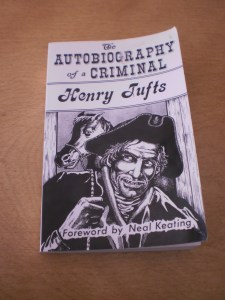 edition was better.
When they both arrived in the mail, I knew that neither was better—they were both not the text I had just read in the archives. They had some good supplements, sure—particularly Edmund Pearson’s Introduction and Appendix, but they weren’t really the book I had read. They were instead the unseasoned bread-without-the-salt version of the text—all that you needed for nutrition, but flavorless.
That was when I decided to make this edition. Since I had already discovered
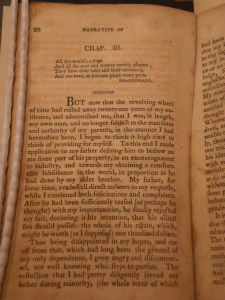
that the book has received very little academic or popular attention over the years, I wanted to do something with it, but I wasn’t sure what that was. My disappointment with Pearson’s edition gave me the answer: someone needed to reprint the book, and do it right this time.
I started by visiting the archives again, and photographing every page of the text for my own reference. I knew I would never be able to finish the job if I didn’t have access to the book at my convenience.
From there, I started transcribing. With the image of the page on one side and a text document on the other side of my screen, I typed everything, line by line, stopping at the end of every page
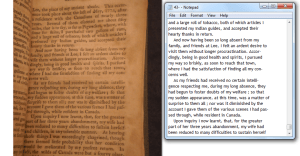
to make sure I wasn’t missing any lines of text. This process eventually finished, after a particularly intensive couple of weeks in which I was probably spending some four hours a day typing.
This left me with a complete (and searchable!) text on my computer, but which was riddled with typographical errors, and wholly unready for printing.
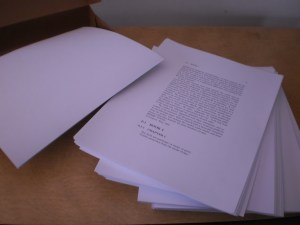
I started reformatting the text to make it appear well in print, using the internet typesetting program ShareLaTeX, but of course this was not the best way to read for errors, so I eventually had the whole text printed up in loose-leaf, so that I could proofread it. I finally finished the proofreading in January of this year.
At that point, it was the beginning of the end. I fixed my errors, and started working in LaTeX to make the text display as nicely as possible, and I added in the original illustrations. The most difficult
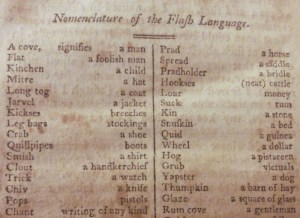
of the final typesetting steps was to make The Nomenclature of the Flash Language appear correctly without taking up too much space on the page.
Then was a final whirlwind of activity—designing the cover (using only printed assets found withing the book itself), writing an explanatory note for the beginning of the book, recording all of the original typographic errors, and ordering  a proof copy to make sure all was in order.
The process is finally complete, three years later. My order invoice for Autobiography of a Criminal reads March 18, 2014.
And now, for the first time since 1807, you can buy a brand-new copy of the full text of The Narrative of Henry Tufts.
 Henry Tufts Online